
API-First Microservices - Scalable Platforms Roadmap
A roadmap to scalable microservices
- Cloud Architecture
- SaaS Platform
- Software Scalability
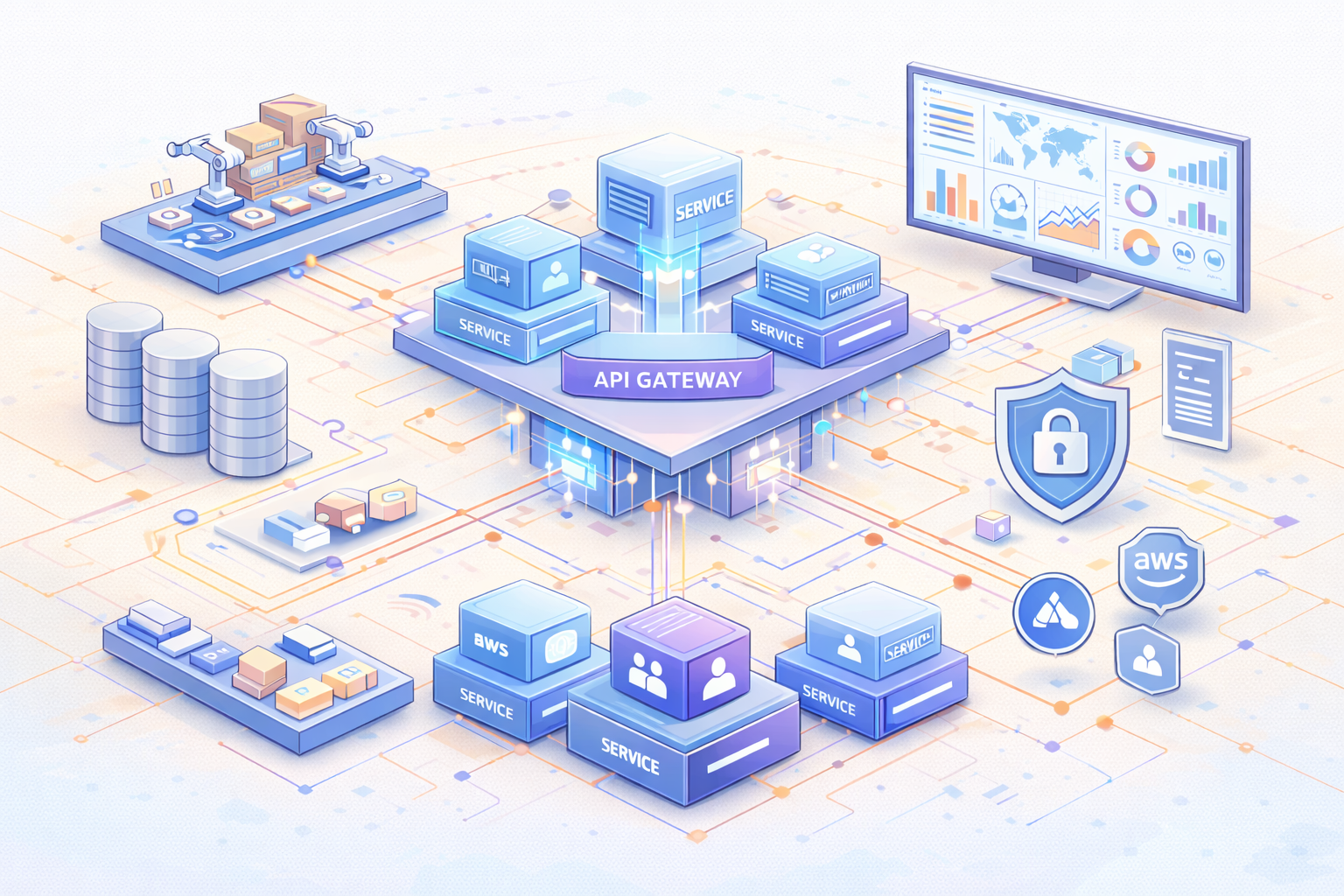
API-First Microservices Architecture: A Scalable Platform Roadmap
1. Define API First Principles
An API first approach places the contract at the center of the design process. Teams begin with clear API contracts before implementing the underlying services. This discipline reduces misalignments and enables independent teams to evolve the system without breaking integrations.
Key artifacts include living OpenAPI specifications for every public surface, consumer driven contract tests, and a documentation portal that remains in sync with the evolving surface. The contract serves as a single source of truth for frontend teams, partner integrations, and internal services. Contract driven development helps teams align on expected behavior from day one.
Practically, start with a core domain and define service boundaries that map to bounded contexts. Each microservice exposes a stable, well documented interface with versioning rules. When teams share a contract, you enable faster iteration with fewer regressions across the platform.
Considerations
- Adopt a contract first mindset for all public and partner interfaces.
- Use OpenAPI or AsyncAPI to cover REST and event driven surfaces.
- Embed contract tests in the CI pipeline to catch mismatches early.
2. Plan the Target Architecture
A scalable platform requires a thoughtful target state. Begin with domain driven design and bounded contexts that map to business capabilities. Align teams to product areas so each microservice has clear ownership and a predictable change cadence.
Embrace polyglot persistence where appropriate, but keep data owned by the service that writes it. Implement asynchronous messaging for decoupled communication, and consider event sourcing for auditability and resilience. A well defined reference architecture reduces technical debt and speeds future evolution.
Patterns to consider
- Domain driven design with bounded contexts and explicit context mapping.
- Event driven architecture using message brokers for decoupled services.
- API first design with stable contracts and independent release cycles.
3. Design API Contracts and OpenAPI
Contracts define what a consumer can rely on. A robust API design process reduces the risk of breaking changes and supports parallel development. OpenAPI acts as the lingua franca for REST interfaces, while AsyncAPI covers event driven surfaces.
Beyond specifications, build a governance model for versioning, deprecation, and backward compatibility. Establish a cadence for contract reviews, test generation, and stakeholder sign offs. Use contract tests to verify that service behavior remains stable as code evolves.
OpenAPI and Contract Tests
Publish a living OpenAPI document for each surface. Generate client SDKs and server mocks to accelerate consuming teams. Integrate contract tests into the CI workflow so that changes that impact a contract fail early rather than at integration time.
4. Decompose into Microservices
Decomposition is both a technical and an organizational challenge. Start with business capabilities and align teams to product features. Favor small, cohesive services that minimize coupling and maximize independent deployment cycles.
Common pitfalls include premature granularity and underestimating the need for shared services. Use the strangler pattern to migrate legacy functionality gradually, while new features ship as microservices. Establish clear service ownership and a lightweight governance model to maintain consistency across the portfolio.
Guidelines
- Bounded contexts map to service boundaries and team responsibilities.
- Avoid shared databases; if needed, implement a clear ownership model and data replication.
- Define service level objectives for reliability and performance per surface.
5. API Gateway and Service Mesh
The gateway and the service mesh each play distinct roles in a distributed system. The API gateway handles ingress, authentication, rate limiting, and orchestration of external calls. The service mesh provides secure, observable, and reliable service to service communication inside the cluster.
Choosing between gateway driven and mesh backed patterns depends on the environment complexity. A common setup uses a gateway for north-south traffic and a service mesh for east-west traffic. Tools like API gateways and mesh frameworks (for example Istio or Linkerd) can offer centralized control without sacrificing performance.
Checklist
- Define authentication and authorization at the gateway level for external users.
- Enforce mutual TLS within the mesh for service-to-service communication.
- Instrument tracing across gateway and mesh to enable end-to-end visibility.
6. Data Security and Observability
Security and observability are foundational to scale. Protect data in transit and at rest with strong encryption and robust key management. Apply fine-grained access control and maintain a zero trust posture across the platform.
Observability means instrumenting logs, metrics, traces, and dashboards that reflect real user experiences. A unified observability platform helps teams detect anomalies quickly and isolate failures. The ROI shows up as shorter incident times and faster feature delivery with confidence.
Security and Governance
- Implement role based access control (RBAC) and attribute based access control (ABAC) for resources.
- Maintain audit trails, data lineage, and compliance reporting aligned with domain needs.
- Schedule regular vulnerability scanning and automated security tests in CI.
7. Migration Strategy and Roadmap
Plan a phased journey from a monolith or legacy stack to a distributed API first platform. Start with a pilot that demonstrates core benefits such as improved time to market and easier integration. Use a clear migration timeline with measurable milestones and risk controls.
Key phases include discovery, pilot, incremental migration of services, and finally the sunset of legacy surfaces. Define metrics for each phase such as deployment frequency, lead time for changes, and change failure rate. A migration plan is not only technical; it is an organizational change plan that aligns teams and governance.
Example Timeline
- Months 1-2: Establish contracts, define surface scope, and align data ownership.
- Months 3-6: Build core microservices and an API gateway skeleton, run contract tests.
- Months 7-12: Migrate additional features, introduce event driven communication, monitor performance.
- Months 12 onward: Sunset legacy modules and optimize overall platform reliability.
8. Governance, Team, and Vendor Considerations
Governance defines who can change what and how. Establish an architecture review board, contract owners, and a clear change management process. Document policy on versioning, deprecation, security updates, and incident response.
Team structure matters. Cross functional squads combining product, platform, and operations ensure fast cycles. When engaging external partners, define clear engagement models, service level agreements, and transparent governance with regular governance meetings.
Vendor Selection
- Assess track records in API first and microservices modernization.
- Request evidence of reliability, security, and scalable delivery models.
- Ensure alignment on architecture decisions and your governance needs.
Conclusion
An API first strategy guides architecture toward scalable, maintainable, and observable systems. A well planned roadmap aligns people, processes, and technology around contracts and boundaries. The result is faster iterations, safer deployments, and a platform that can grow with the business needs.
If you lead a product or platform team and want to tailor this roadmap to your context, consider a structured workshop to map your current surface area to a target architecture. A practical design and implementation plan helps turn the promise of API first into measurable outcomes. This approach also supports better vendor collaborations and a clearer path to modernization.