
API-Security: Integration Patterns Compliance
- all
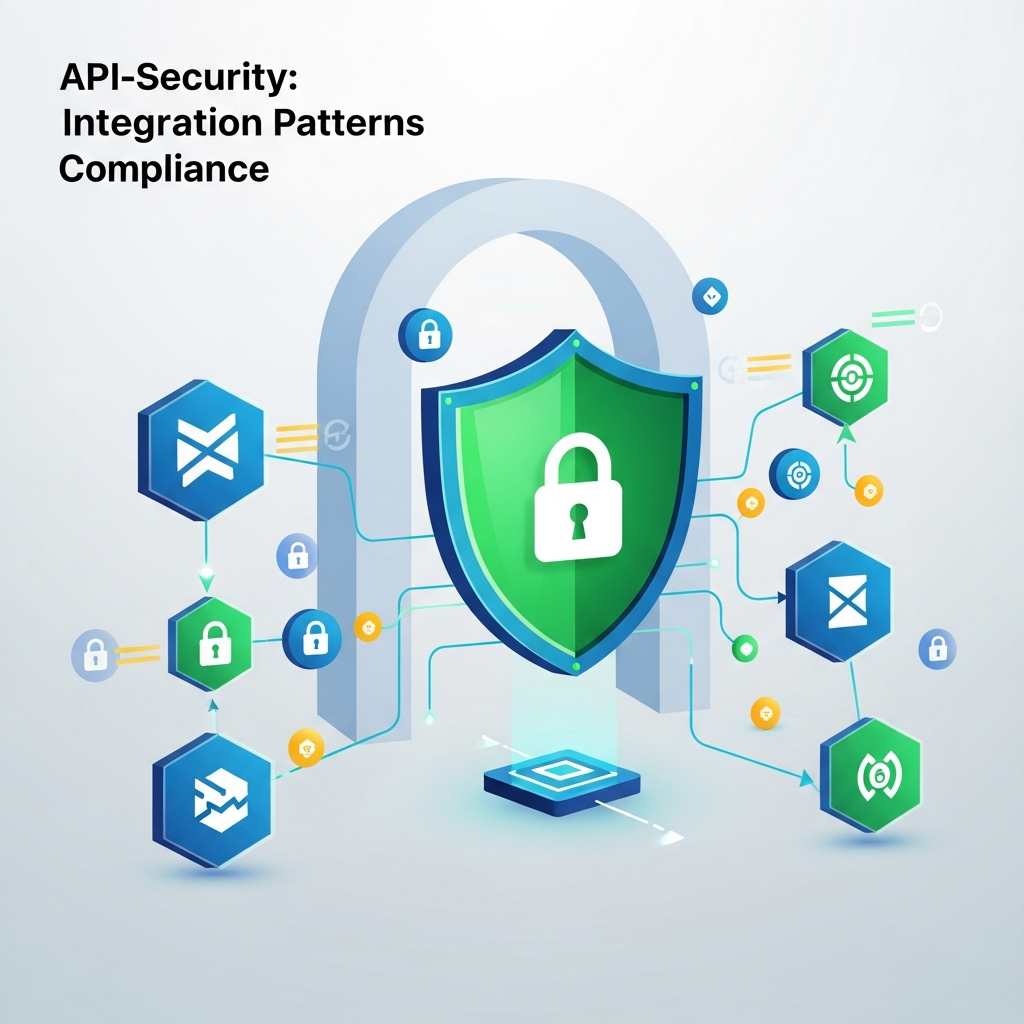
Secure API Integration: Compliance-Driven Patterns for Regulated Environments
Overview: why secure API integration matters in regulated environments
APIs are the connective tissue of modern software ecosystems. In regulated industries, the risk surface increases because data flows cross organizational boundaries, involve sensitive information, and must comply with standards such as PCI DSS and HIPAA. A well-designed API integration strategy delivers not only functionality but also auditable security and governance. This article presents practical patterns and controls that CTOs and architects can apply when integrating third-party systems, payment providers, and internal services.
What you will gain from this guide is a concrete, pattern-based approach rather than a collection of ad-hoc best practices. You will learn how to architect secure, observable, and compliant APIs that scale across multi-cloud environments and partner networks. The guidance here emphasizes repeatability, governance, and measurable risk reduction.
Core integration patterns for secure APIs
Structured patterns help teams reason about security trade-offs and operational complexity. The three core patterns covered here are API-first design, gateway-based security, and service-to-service trust via a service mesh.
API-first design: treat APIs as contracts
Start with stable, versioned resource representations and explicit contract definitions. Use idempotent operations where possible, and design with clear error semantics. Versioned contracts enable safe deprecation without breaking downstream integrations. This approach reduces surprise during production changes and makes audits easier.
Gateway-based security: centralize policy enforcement
API gateways act as the enforcement point for authentication, authorization, rate limiting, and threat protection. A gateway can also mediate token exchange, enforce data residency rules, and route traffic to appropriate backend services. When paired with a robust tokenization strategy, gateways help keep sensitive data out of downstream systems while preserving required functionality.
Service-to-service trust: embrace a secure service mesh
A service mesh provides mutual TLS, mTLS-based authentication, and fine-grained authorization between services. This reduces the exposure surface of internal APIs and helps enforce policy at the network and application layers. It is especially valuable in multi-cloud or hybrid environments where services span several clusters.
Security controls you must implement
Security for API integrations rests on identity, access, transport, and data protection. Implementing a layered approach makes it harder for attackers to compromise data or systems and supports easier compliance reviews.
Identity and access management
Adopt strong authentication (OAuth 2.0 / OpenID Connect) and granular authorization policies. Use roles and scopes to limit access to only what a client needs. Consider just-in-time access and short-lived tokens to reduce the risk window if a credential is compromised.
Transport security and mTLS
Enforce TLS 1.2+ for all connections. For microservices, deploy mTLS to authenticate both clients and services. Regularly rotate certificates and implement certificate pinning where feasible to prevent man-in-the-middle attacks.
Secrets management and rotation
Store API keys, tokens, and other secrets in a dedicated vault. Automate rotation and enforce least privilege. Secrets must never be embedded in code or configuration files that drift between environments.
Data protection at rest and in transit
Encrypt sensitive data both in transit and at rest. Use strong encryption algorithms and manage keys with a centralized Key Management System (KMS). Implement data minimization so that only necessary data traverses external boundaries.
Auditing and non-repudiation
Capture tamper-evident audit trails for every API call, including who accessed what data, when, and from which system. Align logging with compliance requirements and ensure logs are protected and searchable.
Compliance considerations for APIs (PCI, HIPAA, and beyond)
Regulatory requirements shape how you design and operate APIs. PCI DSS, HIPAA, FERPA, and regional data privacy laws influence data handling, access controls, and auditability. The goal is to implement a secure, auditable pattern that enables business operations while staying compliant.
PCI DSS considerations for APIs
Do not store cardholder data unless strictly necessary. Use tokenization or vaulting to replace sensitive data with non-sensitive tokens. Ensure PCI scope is well-defined and that API access to payment data is tightly controlled and monitored.
HIPAA/HITECH considerations
Protect ePHI with encryption, access controls, and robust logging. Implement strict data sharing agreements with business associates and minimize data exposure through secure APIs and consent-based data sharing.
Data governance and logging requirements
Define who can access data, implement data retention policies, and ensure audit trails cover all access and modifications. Maintain data lineage to provide traceability across systems and partners.
Audit readiness and evidence collection
Prepare for audits with repeatable security controls and documented policies. Use policy-as-code to ensure consistent enforcement across environments and automate evidence collection for reviewers.
Tokenization and gateway patterns in practice
Tokenization is a foundational pattern for keeping sensitive data out of downstream systems while preserving business value. Pair tokenization with gateway-level controls to minimize data exposure without impacting integrations.
Tokenization techniques
Choose between format-preserving tokens for legacy systems and non-format-preserving tokens for broader analytics. Maintain a token vault that maps tokens to real data under strict access controls and audit logs.
Gateway pattern choices
Edge gateways provide centralized policy enforcement at the network boundary, while internal gateways enable consistent policy across services. A layered approach, using both, helps isolate sensitive data and simplify compliance scopes.
PCI/PII handling in gateways
Gateways should redact or tokenize PCI data upstream, ensuring that downstream services receive only tokens or masked values. This reduces PCI scope and simplifies PCI DSS validation.
Observability, logging, and monitoring
Observability is essential for security and reliability. Centralized, structured logs and end-to-end traces help detect anomalies, verify policy compliance, and accelerate incident response.
Structured logging and correlation IDs
Use consistent log formats and include correlation IDs across calls. This makes it possible to stitch together distributed traces and understand data flows across systems.
Distributed tracing with OpenTelemetry
Adopt OpenTelemetry for tracing across microservices, gateways, and external integrations. Traces reveal latency, bottlenecks, and policy violations in near real-time.
SIEM integration and anomaly detection
Feed logs and traces into a SIEM for real-time monitoring and alerting. Define security-focused rules to detect unusual access patterns, token misuse, or excessive data exfiltration risks.
Architecture decisions for regulated environments
Architecture choices must balance security, compliance, performance, and operational complexity. A well-structured reference architecture can guide teams through multi-cloud deployments and partner ecosystems.
API gateway + service mesh
Combine an API gateway for external policies with a service mesh for internal service-to-service security. This separation simplifies policy management and improves scalability across environments.
Multi-cloud and data residency
Design data flows to respect residency requirements. Use regional gateways and regional data stores where required, and implement cross-border data transfer controls that align with regulations.
Privacy-by-design and data minimization
Incorporate data minimization from the outset. Collect only what you need, store tokens instead of raw data, and implement robust consent mechanisms for data sharing with partners.
Implementation playbook: from discovery to deployment
Use a practical, repeatable playbook to roll out secure API integration patterns. The steps below are designed to be actionable for CTOs and architects working with third-party systems or regulated data.
1) Map data flows and identify sensitive data
Document all API interactions, data elements, and external participants. Classify data by sensitivity and assign appropriate protection levels to each flow.
2) Define tokenization strategy
Decide which data should be tokenized, where tokens are produced, and where the mapping is stored. Align tokenization with PCI/HIPAA requirements and downstream analytics needs.
3) Architect gateway and mesh layers
Choose gateway capabilities for external APIs and plan a service-mesh implementation for internal calls. Define policy sets for authentication, authorization, and rate limiting.
4) Implement identity, keys, and secrets controls
Set up an IAM model with roles and scopes, configure a KMS for key management, and deploy a secrets vault with automated rotation and access auditing.
5) Build observability from day one
Instrument APIs with structured logs, traces, and metrics. Establish dashboards for security events, data access, and performance SLAs.
Governance, vendor selection, and next steps
Governance ensures that security and compliance persist as you scale. Establish a security review cadence, governance board, and clear criteria for evaluating vendors and partners.
Vendor evaluation and decision criteria
When choosing a partner for API security, look for strong policies, demonstrated PCI/HIPAA experience, transparent auditing, and proven patterns for tokenization and gateway usage. Demand evidence of secure development practices and ongoing monitoring capabilities.
Roadmap and program governance
Develop a phased roadmap with milestones for tokenization, gateway hardening, observability, and compliance attestations. Include remediation plans for any gaps discovered during security reviews.
Call to action: initiate an API security review
If you are planning to integrate third-party systems or migrate to a regulated-commodity API ecosystem, consider starting with a security review and architecture assessment. A structured assessment helps align teams, prioritize fixes, and accelerate compliance delivery.
In summary, secure API integration in regulated environments hinges on a disciplined pattern set: API-first contracts, gateway-based controls, tokenization strategies, robust observability, and governance that aligns with PCI and HIPAA requirements. By applying these patterns consistently, organizations can reduce risk, improve resilience, and speed up integration projects without compromising compliance.