
CI/CD Compliance Guide: Auditable Pipelines for Regulated Software
- all
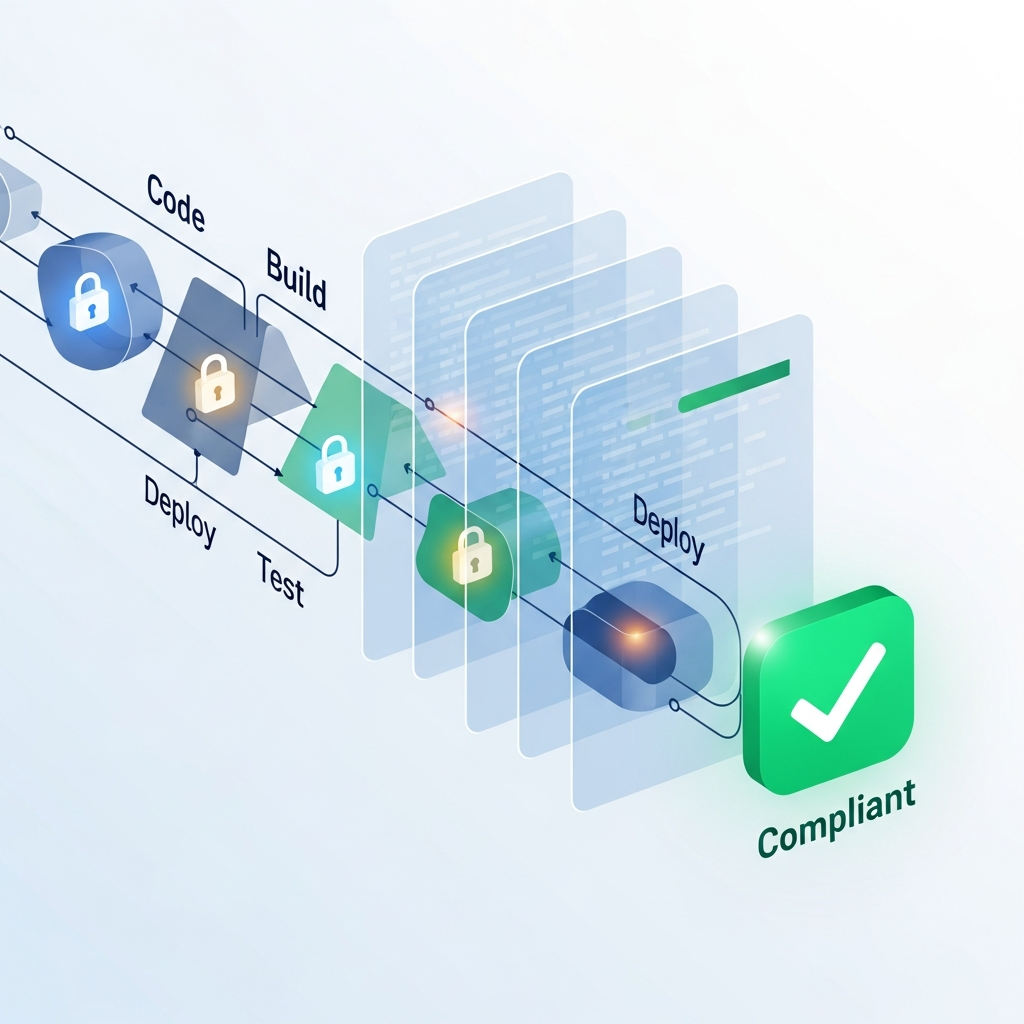
CI/CD Compliance Guide: Auditable Pipelines for Regulated Software
Why CI/CD compliance matters in regulated environments
For teams building software under regulatory scrutiny, CI/CD is not just a development practice—it is a contract with regulators, auditors, and customers. Compliance hinges on demonstrating that every change, build, test artifact, and deployment is traceable, reversible, and securely managed. When pipelines are designed with auditable controls from day one, organizations reduce audit time, lower risk of non-compliance findings, and improve confidence among stakeholders.
The core idea is to shift from a traditional "deploy first, verify later" mindset to a documented, evidence-based process. Auditable pipelines generate verifiable proof of what changed, who approved it, how it was tested, and exactly how it landed in production. This approach supports industries that demand strict data handling, traceability, and incident response capabilities, including healthcare, finance, defense, and critical infrastructure.
In practice, ci/cd compliance translates to a blend of policy, process, and automation. It requires clear ownership, well-defined change control, secure artifact management, and robust monitoring that can withstand regulators’ scrutiny. The payoff is not only regulatory peace of mind but also faster incident response, easier remediation, and a culture of security and quality baked into every release.
Auditable CI/CD pipelines: what constitutes auditable?
An auditable CI/CD pipeline provides a complete, tamper-evident record of the software delivery lifecycle. At minimum, auditable pipelines should capture and retain information about repository state, build configurations, test results, artifact provenance, deployment approvals, and runtime security events. Importantly, the system should enable auditors to reproduce builds, verify that the exact same artifacts were released, and trace each artifact back to its source code and configuration.
Key attributes of auditable pipelines include reproducibility, traceability, immutability, and access-controlled visibility. Reproducibility means anyone can reconstruct a given build from the same inputs and environment. Traceability ensures every change lineage—from commit to production—can be queried. Immutability protects evidence against tampering by storing artifacts and logs in write-once, append-only storage. Access control ensures only authorized personnel can alter critical records.
A practical auditable pipeline also standardizes evidence across teams. By standard, we mean consistent build scripts, uniform test suites, centralized artifact registries, and a single source of truth for deployment approvals. When teams operate with a shared model of auditable evidence, audits become routine rather than extraordinary events.
Core DevSecOps controls for auditable pipelines
Building auditable pipelines starts with a solid control framework. DevSecOps integrates security into every stage of development and operations. The following controls form a practical baseline for regulated environments:
Access control and identity management
Enforce least-privilege access across all CI/CD components. Use centralized identity management to govern who can trigger builds, modify pipelines, promote artifacts, or approve deployments. Implement multi-factor authentication, role-based access control, and just-in-time access for highly sensitive actions. Maintain an auditable log of all authorization events to answer questions like who granted access and when.
Change management and release governance
All changes should flow through a formal change-management process. This includes documented change requests, design reviews, security sign-off, and production release approvals. Each stage of the pipeline should reflect the status of the change request, including test pass rates and risk assessments. Automate this governance as part of the pipeline so approvals are not bypassed.
Artifact provenance and reproducibility
Artifacts—binaries, containers, and images—must be linked to precise source code commits, build scripts, and environment configurations. Use immutable artifact registries and container image signing to ensure the integrity of what gets deployed. Reproduce builds by caching dependencies and capturing exact tool versions, OS images, and environment variables used in the build.
Secrets management and configuration as code
Secrets should never live in code repositories. Use dedicated secret management tools, rotate credentials regularly, and adopt encryption at rest and in transit. Treat configuration as code, so changes to settings are versioned, auditable, and reversible just like application code.
Dependency management and SBOMs
Maintain a bill of materials (SBOM) for every artifact, including third-party libraries and runtime components. Regularly scan for known vulnerabilities, track license obligations, and ensure that vulnerable dependencies do not propagate into production.
Security testing integrated into the pipeline
Security tests—static analysis, software composition analysis, dynamic analysis, and runtime security checks—must be baked into the build and test stages. Results should block releases when thresholds for severity are exceeded unless a documented exception is approved through governance.
Infrastructure as code security
Treat infrastructure changes with the same rigor as application changes. Use code reviews, policy-as-code, and automated scanning for misconfigurations in cloud resources. Store IaC in version control and require pipeline-driven validation before applying changes to production environments.
Pipeline traceability and logging
Traceability and logging form the backbone of auditable pipelines. Every action in the pipeline should emit structured, searchable logs that tie back to the exact artifact, commit, and environment involved. This enables rapid forensic analysis in the event of an incident and simplifies audit inquiries.
Structured logging and log integrity
Standardize log formats across build, test, and deployment steps. Use structured logs with readily identifiable fields (e.g., build_id, commit_hash, artifact_version, environment, user_id, timestamp). Sign logs or store them in tamper-evident storage to prevent post-hoc alteration.
Event correlation and traceability maps
Build a traceability graph that connects commits to builds to tests to artifacts to deployments. This mapping provides auditors with end-to-end visibility and a straightforward way to answer questions like: Which commit introduced a bug, and was it contained before deployment?
Retention and disposition policies
Define retention periods that comply with regulatory requirements. Ensure that logs and artifacts are retained long enough for audits, but also that sensitive information is purged or masked when appropriate. Regularly review retention policies to adapt to changing regulations.
Secure deployment evidence
Deployment evidence consists of the concrete artifacts that demonstrate a successful, compliant release. This is not merely a checkbox; it is the basis for regulatory confidence and incident response readiness.
Components of secure deployment evidence include the exact artifact version promoted to each environment, the approval signatures, the test results that passed, the runtime monitoring posture, and the deployment date/time aligned with regulatory windows. Centralize evidence in a compliant repository that keeps the chain of custody intact and accessible to authorized stakeholders.
In regulated settings, it is common to attach evidence to an audit package that regulators can review without exposing sensitive data. This requires redaction strategies and targeted access policies, ensuring only approved auditors can see restricted information while preserving the integrity of the evidence.
Regulatory deployment checklist
Mapping your CI/CD practices to a regulatory deployment checklist helps ensure you cover all angles—from governance to technical controls. Use the following practical checklist as a starting point and tailor it to your industry requirements:
- Define a single source of truth for all pipelines and keep it under version control.
- Require multi-person approvals for production deployments; document every approval.
- Sign and verify artifacts to guarantee integrity and provenance.
- Enforce least-privilege access and strong identity management for all pipeline stages.
- Automate security testing at multiple gates (SAST, SCA, DAST, container scanning).
- Capture and retain comprehensive logs and audit trails with tamper-evidence.
- Maintain SBOMs and monitor third-party components for vulnerabilities.
- Implement runtime security monitoring and instant rollback capabilities.
- Document disaster recovery and incident response procedures aligned with regulations.
- Regularly review and update the checklist to reflect new regulatory guidance.
Regulators appreciate demonstrated control maturity. The checklist above is not a one-time exercise; it should become part of a living program with continuous improvement cycles, audits, and periodic simulations.
Tooling landscape for auditable CI/CD
A robust tooling stack is essential to achieve auditable pipelines. Different tools offer distinct strengths for traceability, security, and governance. Below is a high-level view of common capabilities and how they map to auditable evidence:
- Source control with immutable history (Git, pull request auditing).
- CI platforms that support pipeline as code, signed builds, and audit trails (GitHub Actions, GitLab CI, Jenkins, Azure DevOps).
- Artifact registries with signing and provenance (OCI signing, JFrog, Nexus).
- Secret management integrated with healthcare/financial compliance (hashicorp Vault, AWS Secrets Manager, Azure Key Vault).
- Security testing integrated into CI (SAST/DAST/IAST, dependency scanning).
- Container security and SBOM generation (Trivy, Syft, Grype, Clair).
- Immutable logging and storage (WORM storage, centralized SIEM integration).
- Infrastructure as code with policy enforcement (Terraform with Sentinel/OPA, CloudFormation with guardrails).
When selecting tooling, prioritize those that provide out-of-the-box audit-ready artifacts, strong access controls, and clear, queryable provenance. Favor platforms that offer native governance features and can export evidence in regulator-friendly formats.
Implementation roadmap: a practical 90-day plan
For teams starting their journey toward auditable pipelines, a staged, risk-based rollout reduces disruption while delivering tangible benefits quickly. The following phased plan focuses on governance first, then automation, then optimization:
Phase 1 — Governance and baseline (0-4 weeks)
Establish policy ownership and document the auditable pipeline requirements. Create a basic change-management workflow, define artifact provenance standards, and set up a central log and evidence repository. Begin inventorying existing pipelines and identify gaps against the regulatory deployment checklist.
Phase 2 — Reproducibility and artifact management (4-8 weeks)
Implement reproducible builds, SBOM capture, and artifact signing. Standardize the pipeline as code templates and enforce artifact provenance across all projects. Introduce access controls and begin collecting audit logs in a centralized location.
Phase 3 — Security integration (8-12 weeks)
Integrate security testing at defined gates, enforce secrets management, and extend policy-as-code coverage to infrastructure. Begin formalizing deployment approvals and improving the visibility of security posture through dashboards.
Phase 4 — Maturity and optimization (12+ weeks)
Expand cross-team adoption, refine governance metrics, and automate evidence packaging for auditors. Conduct regular tabletop exercises and run mock audits to validate readiness and drive continuous improvement.
Common pitfalls and anti-patterns to avoid
Even with a clear plan, teams frequently stumble on a few recurring patterns. Recognize and mitigate them early to preserve momentum:
- Treating compliance as a one-off project rather than a lifecycle program.
- Overloading pipelines with every possible check, causing regressions and delays.
- Relying on static evidence without validating the reproducibility of builds.
- Underestimating the importance of SBOMs and vendor risk management.
- Skipping access controls or poorly documenting approvals, which weakens governance.
To avoid these, balance security with delivery speed. Use risk-based gating, adopt lightweight but rigorous controls, and continuously calibrate the policy against regulator expectations.
Practical fintech example: auditable pipeline in action
Imagine a fintech platform delivering customer-facing services with sensitive financial and personal data. The team adopts a policy-driven CI/CD approach where every change to the codebase triggers a lineage event: commit, build, test suite results, SBOM generation, artifact signing, and a gated deployment. Access to deployment environments is tightly controlled and requires dual approvals for production release. Logs from all stages feed into a centralized SIEM with anomaly detection and alerting.
In this scenario, auditors request evidence packages that contain the exact artifact version, deployment timestamp, and a summary of test results. Because the pipeline is fully reproducible, auditors can re-run the release in a sandbox with the same inputs and environment settings. If a vulnerability is discovered, containment is immediate: the artifact is rolled back, and the registry entry and logs reflect the rollback, enabling rapid root-cause analysis.
The outcome is tangible: faster audits, lower risk of non-compliance, and a higher-confidence security posture that supports product velocity without sacrificing regulatory adherence.
Governance, roles, and metrics
A sustainable auditable CI/CD program requires clear governance and measurable success. Define roles such as Compliance Owner, Security Engineer, CI/CD Platform Owner, and Release Manager. Establish metrics that matter to regulators and leadership: time-to-audit readiness, number of evidence packages generated per release, percentage of deployments with signed artifacts, mean time to rollback, and the rate of successful audits without findings.
Regular executive updates should translate technical controls into business risk metrics. Tie improvements in traceability, deployment speed, and vulnerability remediation to regulatory posture and customer trust. A mature program treats compliance as a competitive differentiator rather than a hurdle to release.