
CrossPlatform-Mobile Strategy Framework
A scalable roadmap for cross-platform mobile apps
- Cross Platform Apps
- Mobile Architecture
- App Modernization
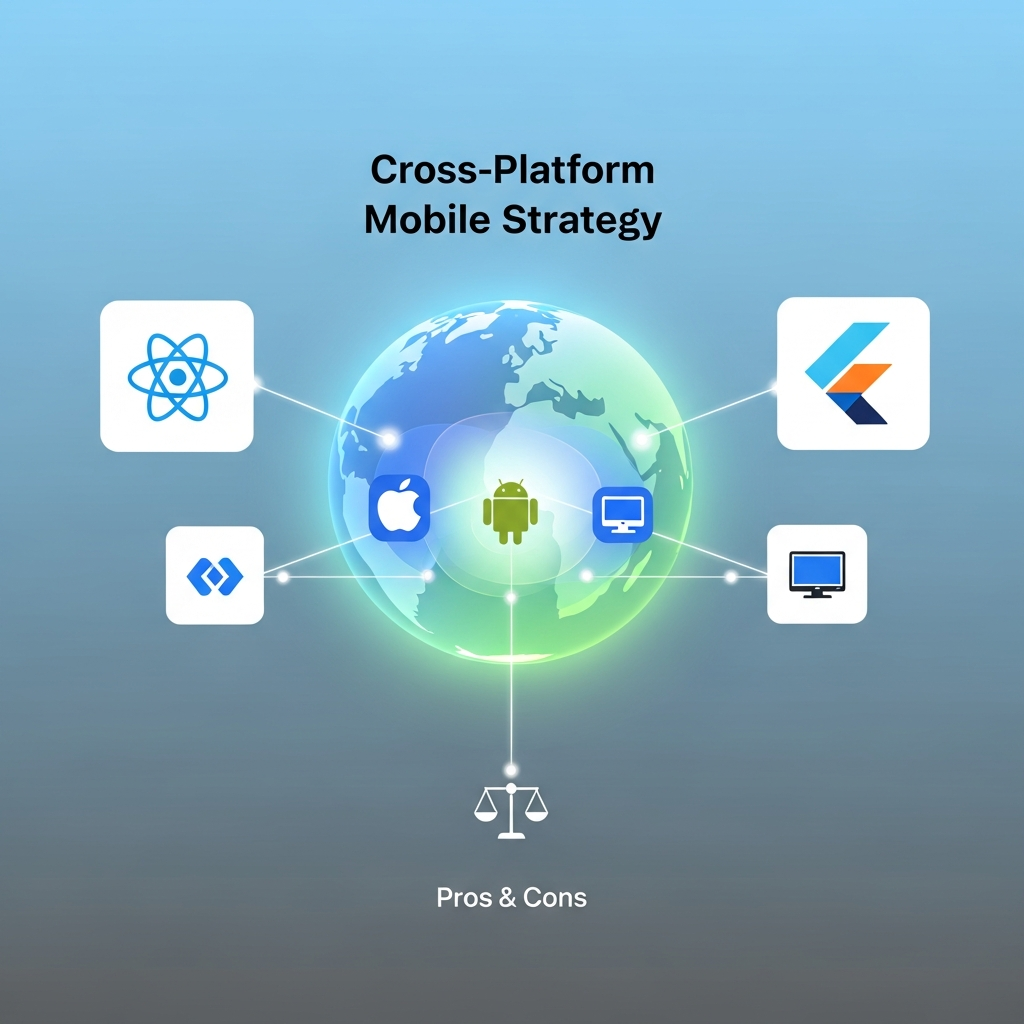
CrossPlatform-Mobile Strategy Framework
- Foundations of cross-platform strategy
- Platform options and decision drivers
- Shared code architecture patterns
- UX design and performance considerations
- A practical decision framework
- Vendor collaboration and governance
- Roadmap from discovery to scale
Foundations of cross-platform strategy
A robust cross-platform mobile strategy starts with a clear understanding of the product goals, user expectations, and the constraints of the market. Enterprises often face a tug-of-war between speed to market and the need for a native, high-fidelity experience. The right decision balances time-to-value with long-term maintainability, security, and the ability to evolve the product stack without incurring unsustainable technical debt. Key decision criteria include: how quickly you must validate core features, the level of native device integration required (GPS, sensors, biometrics, offline storage), performance expectations under peak load, and the governance model you can sustain with external teams. You also need to weigh the team’s existing capabilities, the ability to reuse shared code across platforms, and the roadmap for features that rely on native platform improvements. In practice, a sound framework translates these criteria into a decision rubric that helps leaders compare options in a consistent way. Finally, consider the business implications of selecting a path that may affect vendor lock-in, roadmap predictability, and the ease of onboarding new engineers in the future. A framework that treats architectural choices as strategic investments—rather than one-off engineering decisions, will better serve regulated industries, large user bases, and multi-product portfolios. This article presents a framework designed for product leaders and CTOs at mid-market to enterprise scale, focusing on actionable steps, trade-offs, and concrete criteria you can apply in your next evaluation.
Platform options and decision drivers
React Native
React Native remains a popular choice for teams seeking rapid cross-platform delivery with a large ecosystem of libraries and community support. The framework excels when the product requires a compelling, near-native UX, strong JavaScript expertise exists in the team, and the project benefits from a broad pool of developers. Pros include fast iteration cycles, a large talent pool, and the ability to harmonize web and mobile teams around a common codebase for certain layers of the app. Cons to watch for include potential performance bottlenecks in highly demanding graphics or animation scenarios, the need for ongoing bridging work to access native features, and the risk of drift between iOS and Android experiences if component parity isn’t vigilantly managed. For regulated environments or high-security contexts, you’ll need disciplined governance and rigorous testing across both platforms to avoid inconsistencies and subtle security gaps.
Flutter
Flutter offers a unified rendering engine and a single codebase that renders consistently across iOS, Android, and beyond. It often delivers faster UI responsiveness and smoother animations, which can translate into better perceived performance. Pros include a cohesive design system, strong performance, and a growing ecosystem of widgets that speed up development. Cons can include a smaller ecosystem for some niche integrations and the need to manage platform-specific features through platform channels, which can add complexity for engineers new to Flutter. For teams prioritizing a strong, consistent user experience with fewer platform-specific divergences, Flutter can be a compelling choice. However, ensure your product roadmap requires frequent, specialized native integrations that might demand bridging work or custom plugins, increasing maintenance overhead over time.
MAUI, Capacitor, and other options
Microsoft MAUI (Multi-platform App UI) and Capacitor present alternatives that emphasize different trade-offs. MAUI can be attractive if your organization already leans toward the .NET ecosystem and wants deep Windows ecosystem compatibility. Capacitor enables a web-first approach, packaging web apps as native experiences, which is ideal for teams with strong web skills who want to reuse existing front-end work. Each option has its own maturity curve, performance characteristics, and native capability coverage. When choosing among these, weigh the complexity of native plugins, the long-term maintenance plan, and the strategic fit with your product portfolio. Across all platform choices, a consistent pattern emerges: the decision should be driven by business goals, not merely technology preferences. Start with the features you must deliver in the first 12–18 months, map them to platform capabilities, and determine how much you can reuse in code across platforms. The right choice often depends on your team's expertise, the criticality of native integrations, and your willingness to invest in platform-specific optimizations where they matter most.
Shared code architecture patterns for maintainability
One of the most important levers in a cross-platform strategy is how you structure code and teams to sustain velocity. A well-designed architecture reduces duplication, enables faster iterations, and makes it easier to evolve the product without cracking under the weight of platform fragmentation. Common patterns include a monorepo for shared business logic, with platform-specific layers for UI and integrations. This setup can speed up changes that affect all platforms, while preserving the flexibility to optimize the user experience per platform when required. Component libraries and design tokens become central assets, ensuring visual and interaction parity across iOS and Android while still respecting native conventions where they matter most. Consider adopting a layered architecture: a cross-platform business logic layer that handles data access, validation, and orchestration; a platform-specific presentation layer that renders UI and handles navigation; and a shared data layer that abstracts APIs and caching. In addition, plan for robust state management, offline-first capabilities when network connectivity is unreliable, and a clear API contract that supports modular backends and microservices. These decisions influence how quickly you can evolve features, fix issues, and scale the product across multiple platforms.
Code reuse vs. platform-specific investment
Reusing code accelerates delivery but can lead to compromises on UX or performance if not carefully managed. A practical rule is to maximize business logic and data handling in the shared layer, while allowing UI and platform-specific optimizations where users expect native behaviors. Design tokens, typography scales, and color systems should be centralized so that a single update propagates consistently to all platforms. At the same time, maintain a disciplined approach to platform-specific components when required for performance or accessibility.
Quality, security, and CI/CD
Consistency in quality is non-negotiable in enterprise contexts. Establish a strong CI/CD pipeline that runs platform-agnostic tests alongside platform-specific checks. Security testing should be integrated into the pipeline with automated checks for data leakage, insecure storage, and API exposure. A maturer approach includes policy-driven access controls, dependency scanning, and regular penetration testing tied to risk assessments. The architectural decisions you make must align with your security and privacy requirements, especially in regulated industries.
UX design and performance considerations
User experience is a differentiator that transcends code. A cross-platform strategy must respect native conventions while delivering a consistent brand experience across devices. Achieving this balance requires a thoughtful approach to navigation patterns, input ergonomics, and readability, as well as performance optimizations that make the app feel fast and responsive. Onboarding, authentication flows, and core task journeys should feel natural on both platforms. Use platform-appropriate motion, typography, and control sizes, but synchronize your design system so that interactions and visual language remain cohesive. Performance budgets help teams avoid regressions; for example, target frame rates that feel smooth on mid-range devices, optimize image assets, and aggressively cache data where appropriate to reduce network latency. Accessibility should be baked in from day one. Ensure color contrasts meet WCAG guidelines, support screen readers, provide scalable text, and design touch targets that are comfortable across form factors. Testing across a representative mix of devices and OS versions is essential to uncover edge cases that could degrade the user experience in real-world conditions. In enterprise contexts, consider accessibility and localization needs that support a diverse user base and compliance requirements.
A practical decision framework
To translate platform options into a concrete choice, use a structured decision framework that encompasses the product, team, and business dimensions. The following steps provide a repeatable process that many product leaders have found effective.
- Define MVP scope and risk profile. List the must-have features, platform requirements, and any regulatory constraints. Identify which capabilities are non-negotiable and which can be deferred.
- Map features to platform capabilities. Create a feature-to-platform capability matrix that highlights where code reuse can occur and where platform-specific work is unavoidable.
- Assess performance, UX, and access to native features. Use a scoring rubric to evaluate expected performance, perceived user experience, and the degree of native integration required.
- Evaluate team readiness and partner options. Inventory internal skills, external vendor capabilities, and the potential to establish a scalable offshore or nearshore delivery model with governance.
- Perform a risk-adjusted TCO analysis. Consider development time, maintenance costs, potential tech debt, and long-term licensing or tooling expenses across platforms.
- Prototype and test core flows. Build a small, end-to-end prototype using the leading platform options to validate UX parity, performance, and developer velocity before committing.
- Make a decision with a governance plan. Document the chosen path, governance structure, milestones, and a clear decision horizon for reevaluation as requirements evolve.
As a practical rubric, you can assign a 1–5 score for each criterion (speed to market, platform maturity, native capability access, maintainability, and total cost of ownership). The aggregate score helps you compare options objectively and reduce bias toward a particular framework or vendor. Remember that the best choice is the one that aligns with your product strategy, talent capabilities, and long-term roadmap, not merely the strongest short-term benefits.
Vendor collaboration and governance
Choosing a partner for cross-platform development goes beyond selecting a single framework. The governance model you establish with a vendor shapes delivery quality, transparency, and risk management. Start with a clear engagement model that fits your needs: dedicated teams for ongoing product work, fixed-scope projects for MVPs, or hybrid approaches that combine staff augmentation with outcome-based milestones. Critical governance considerations include ownership of code, IP rights, data security practices, and compliance with applicable regulations. Define service level agreements (SLAs), quality metrics, and a transparent sprint cadence. Establish risk-management processes, including regular architecture reviews, code reviews, and security testing gates. A mature relationship will also include a mechanism for handling scope changes, prioritization, and knowledge transfer to your internal teams as the project matures. When evaluating agencies, look for demonstrated cross-platform success in similar domains, a track record of delivering on time, and robust DevOps and security capabilities. Request evidence of architecture governance, testing practices, and a portfolio of multi-platform products. A partner who can provide reference customers, a transparent pricing model, and a credible roadmap will help you reduce uncertainty and accelerate decision-making.
Roadmap from discovery to scale
A successful cross-platform program follows a disciplined progression from discovery to scale. Begin with discovery to capture strategic intent, user needs, and technical feasibility. Move into architecture design and proof-of-concept development to validate core assumptions. Then transition to MVP delivery with a focus on user experience, performance, and security. Finally, scale by formalizing design systems, expanding to additional platforms, and refining governance practices for long-term sustainability. Key milestones include a design and tech feasibility review, a shared codebase strategy, architecture governance milestones, a security and privacy compliance checkpoint, and a platform maturity assessment. Establish a clear feedback loop between product, design, and engineering teams so improvements are continuously integrated into the roadmap. This lifecycle ensures that the cross-platform strategy remains aligned with business goals as market needs evolve. In practice, the roadmap should articulate concrete metrics: time-to-market for new features, rate of feature parity across platforms, defect rates per platform, and user engagement indicators that reflect the quality of the UX. By tying each phase to measurable outcomes, you create a compelling narrative for executives and investors while keeping delivery predictable for product teams.