
Design-Led MVPs - Rapid Prototyping Playbook
From Idea to Validated Prototype
- MVP Strategy
- Rapid Prototyping
- Product Validation
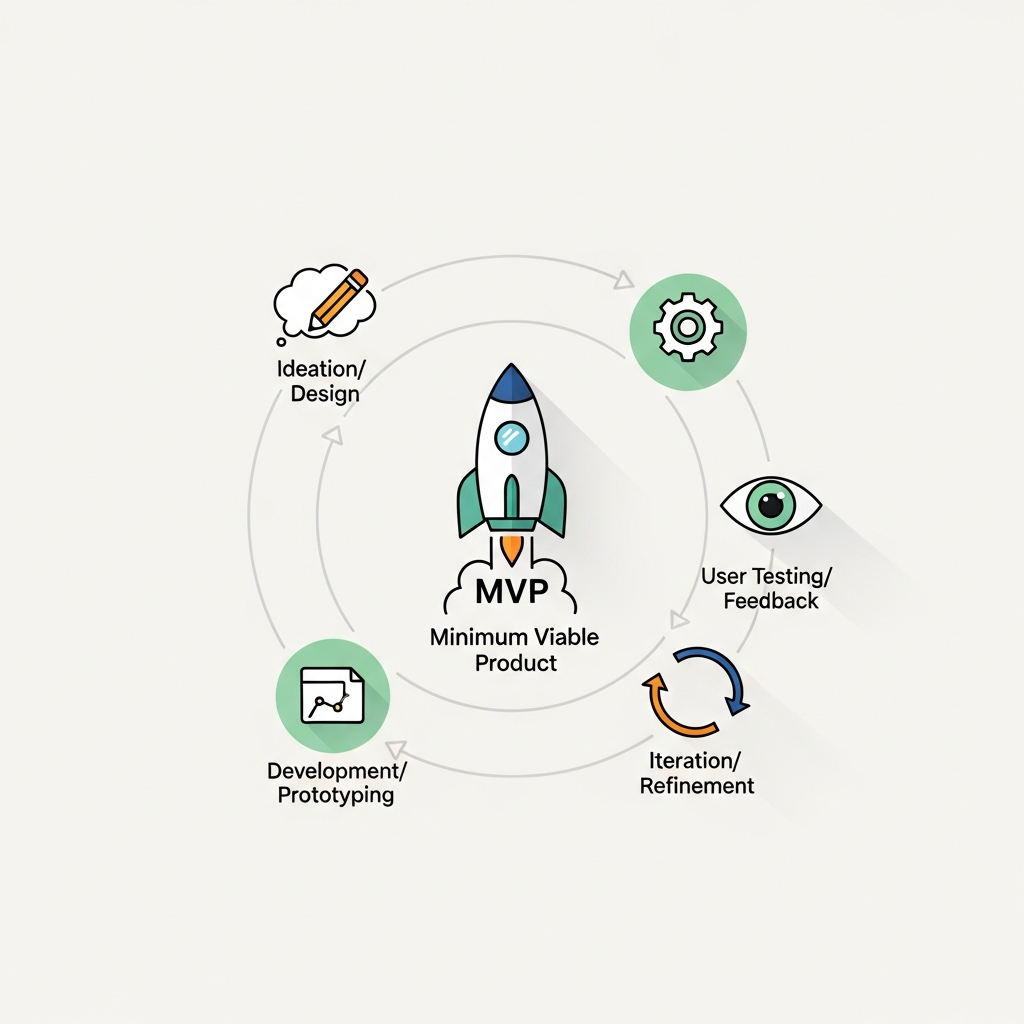
Design-Led MVPs - Rapid Prototyping Playbook
- Why Design-Led MVPs Matter
- Defining MVPs and Prototype Scope
- Frameworks for Rapid Prototyping
- Step-By-Step MVP Prototyping Process
- Design Sprint Myths and Facts
- UX Design for MVPs: Principles in Practice
- Usability Testing for MVPs: Setup and Practice
- Prototype Validation and Decision Gates
- Common Pitfalls and Best Practices
- Roadmap and Measuring Success
Why Design-Led MVPs Matter
In fast-moving markets, the fate of a product idea hinges on how quickly you can learn from real users. A design-led MVP approach places user experience at the center of validation, rather than treating UX as an afterthought. This shift yields tangible artifacts that reveal authentic behavior and guide subsequent decisions. Design-led MVPs surface usability issues early and expose gaps in your value proposition before committing to a full build. When a prototype demonstrates actual user interactions, it becomes a credible tool for stakeholder alignment, investor conversations, and roadmap prioritization. The objective is not perfection at launch but rapid learning that informs the next strategic steps. For founders and product leaders, the payoff spans three dimensions: faster learning cycles, clearer signals of product-market fit, and tighter governance around what to build next. The MVP becomes the learning engine that informs product strategy, growth experiments, and long-term architecture choices. The design lens helps teams stay focused on outcomes that matter to users rather than drifting into feature bloat.
Defining MVPs and Prototype Scope
Defining an MVP is about scope, not simply reducing features. The right MVP exposes the minimum set of user tasks that validate a core value proposition while remaining faithful to the user journey. It should deliver enough fidelity to reveal authentic behavior without chasing perfection in edge cases. Two practical guardrails help set the MVP scope. First, anchor scope to a single core job-to-be-done, and second, identify the handful of critical flows that determine whether a user would adopt the product. Everything outside those flows can be treated as future enhancements or design experiments to test separate hypotheses. Prototype fidelity should align with learning goals. Early explorations can be low fidelity and quick to modify, while later iterations may rise to medium fidelity to test specific interactions or onboarding motions. The aim is to learn faster, not to deliver a polished product immediately.
Frameworks for Rapid Prototyping
Several frameworks complement a design-led MVP approach. The Lean Startup philosophy emphasizes building, measuring, and learning in short loops, transforming ideas into validated experiments. Design Thinking keeps the user at the center, guiding a structured path from empathy to ideation to testing.A practical hybrid combines a Value vs. Effort matrix to prioritize features, a Design Sprint to compress discovery into a fixed window, and a prototyping strategy that maps fidelity to learning goals. A simple rule of thumb is to attach each feature to a hypothesis and choose the lowest fidelity prototype capable of validating that hypothesis. Another useful construct is the Prototype Validation Grid, a mini framework that pairs user tasks with success criteria and probes that confirm or refute underlying assumptions. This grid keeps teams focused during testing sessions and clarifies what a successful MVP looks like before any build begins.
Step-By-Step MVP Prototyping Process
Below is a practical sequence that turns ideas into testable learning artifacts. Each step includes tangible deliverables and checkpoints to keep teams aligned.
Step 1: Discovery and Hypothesis
Begin with a concise problem statement and a clear hypothesis about the user need. Define measurable outcomes that would signal success if the hypothesis holds. Document assumptions about users, context, and success criteria to frame your experiments.
Step 2: User Flows and Task Mapping
Translate the hypothesis into user journeys and core tasks. Map the paths a user would take to complete the primary job-to-be-done. Identify moments of truth where value is delivered and locate friction points that could derail progress.
Step 3: Prioritization and Scope
Apply a simple prioritization method, such as impact vs. effort, to decide which tasks to prototype. Limit the MVP to the minimum set that enables learning about core value resonance. Resist the urge to prototype every possible edge case at this stage.
Step 4: Prototyping Levels
Assign fidelity levels to each flow. Early screens can be paper or digital wireframes, moving toward interactive mid-fidelity prototypes as learning demands. Reserve high fidelity for flows where interaction and visual cues are critical to understanding the experience.
Step 5: Testing and Iteration
Plan short, focused usability sessions with real users representing the target audience. Gather quantitative signals (task completion, time on task) and qualitative insights (frustrations, delights). Iterate quickly, updating the prototype to reflect learnings after each round.
Step 6: Validation and Go/No-Go
Define a decision gate that answers whether to ship, revise, or pivot. Document what learning would trigger a new hypothesis or an expanded MVP. This gate keeps stakeholders aligned on next steps and prevents scope creep.
Design Sprint Myths and Facts
Design sprints compress discovery into a five-day cycle, delivering a tested prototype and a concrete plan. A common myth is that sprints replace ongoing product development; in reality, they accelerate the learning that informs a longer roadmap. The facts are straightforward: a sprint surfaces a testable concept, aligns stakeholders, and reduces risk before heavy investment. Key practices during a sprint include mapping the user journey on day one, inviting diverse perspectives, and ensuring decision makers commit to a clear prototype goal by day four. The fifth day is reserved for real user testing and rapid synthesis of feedback. When run with discipline, a sprint becomes a powerful catalyst rather than a rushed exercise.
UX Design for MVPs: Principles in Practice
Choosing the right UX approach for an MVP means balancing usability with speed. Prioritize critical moments where users form first impressions, complete essential tasks, and feel confident that they can trust the product. Clear information architecture, concise copy, and a consistent visual language remove cognitive load and accelerate learning. Designing for MVPs also means embracing constraints. Limited features require precise, meaningful interactions. A well-crafted onboarding flow, focused feedback messages, and an accessible design system help maintain consistency across iterations and future product expansions.
Usability Testing for MVPs: Setup and Practice
Usability testing should be an ongoing discipline, not a one-off activity. Start with a small, representative user group and a few well-defined tasks that reflect the MVP flows. Define success metrics in advance, such as task completion rate, time on task, and error frequency. During sessions, observe naturally occurring behavior rather than narrating every thought. Invite participants to think aloud only if it helps reveal pain points. After each test, debrief with the team and translate findings into concrete design changes for the next prototype iteration.
Prototype Validation and Decision Gates
Validation hinges on measurable signals. A high-quality prototype should produce data that confirms or challenges your core assumptions. Use a mix of qualitative feedback and quantitative metrics to craft a balanced judgment about product viability. Documentation matters. Record observed user actions, highlight moments of success and friction, and translate insights into changes to the hypothesis or roadmap. Clear documentation ensures learnings persist beyond the sprint and inform future cycles.
Common Pitfalls and Best Practices
Avoid feature bloat by tying every enhancement to a testable hypothesis. Don’t overestimate what users will do in the first version; instead, structure experiments that reveal whether the core value holds. Keep stakeholders engaged with transparent milestones and explicit go/no-go criteria that govern the next phase. Best practices include formalizing a learning plan at the outset, creating lightweight design systems to ensure consistency, and scheduling rapid feedback loops with real users. Celebrate early wins that validate the MVP’s value proposition while remaining honest about the risks uncovered in testing.
Roadmap and Measuring Success
A design-led MVP should feed directly into the product roadmap. Translate validated insights into a prioritized backlog and a clear plan for incremental product growth. The roadmap should reflect learned preferences, usage patterns, and the metrics that matter to your business goals. Success measurement goes beyond vanity metrics. Track meaningful indicators such as activation rates, onboarding retention, and the correlation between MVP learnings and downstream feature adoption. When teams see a tangible link between prototyping and real-world outcomes, the case for continued investment becomes compelling. As you evolve from MVP prototyping toward a mature product, maintain the discipline of rapid learning. Invest in a lightweight, scalable design system so future enhancements stay aligned with the original design intent. This playbook is a repeatable framework designed to accelerate decision-making, reduce risk, and keep your product aligned with user needs.