
Design-Sprint: ROI Playbook
- all
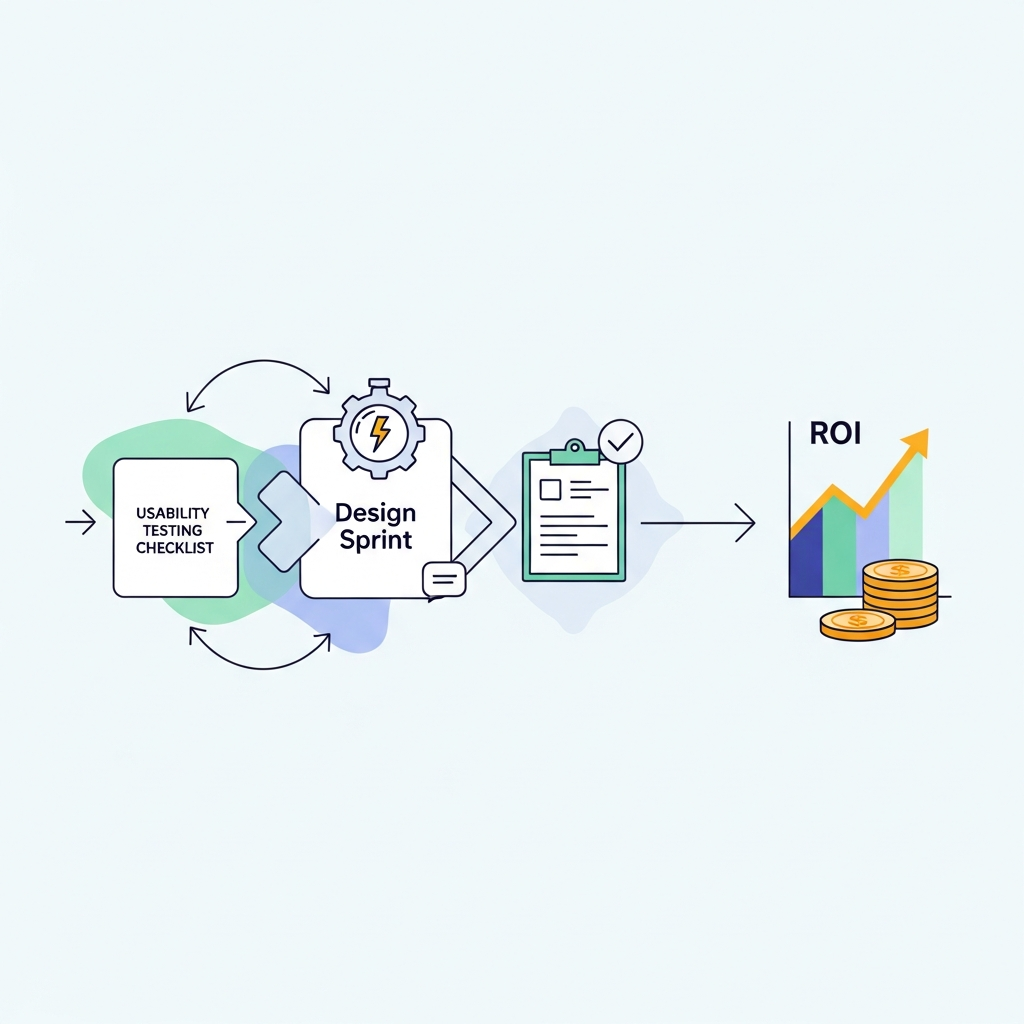
Design-Sprint ROI: A Practical Playbook for Measurable ROI
Overview
Organizations invest in design sprints to rapidly validate ideas, de-risk product decisions, and align cross-functional teams around a common roadmap. Yet many teams struggle to translate sprint outputs into tangible business value. This playbook shows how to structure a design sprint with a clear ROI lens, so every hypothesis tested, and every prototype built, drives measurable outcomes that inform the product roadmap.
At its core, a design sprint ROI approach treats the sprint as a structured experiment. It defines the desired business question, identifies the expected value, and then measures what changes in user behavior, activation, or revenue would be needed to justify the investment. When done well, the sprint acts as a fast-forward button for learning—reducing risk and aligning stakeholders around a shared path forward.
The ROI Mindset: Aligning Sprint Outcomes with Business Metrics
Defining ROI in design sprints
ROI in a design sprint isn’t just a financial equation. It combines time-to-value, user outcomes, and strategic risk reduction. A practical framework looks at three value dimensions: user value (how much easier or more delightful the product is to use), business value (potential lift in conversion, activation, or retention), and delivery value (faster decision-making and reduced development rework).
To make ROI observable, pair each sprint hypothesis with a concrete success criterion. For example, if the goal is to improve onboarding, define a target task completion rate or a reduction in drop-off at a critical step. If the goal is new feature adoption, specify a conversion or activation metric that would indicate product-market fit.
Key business metrics that sprint outcomes impact
- Conversion rate at key funnels (signup, checkout, activation)
- Time-to-value and time-to-first-value for new users
- Activation rate and user onboarding completion
- Churn risk reduction and retention lift
- Development efficiency (reduction in rework, faster validation cycles)
- Revenue impact from feature adoption or upsell opportunities
By mapping sprint outcomes to these metrics, product leaders can translate design learning into a roadmap with explicit ROI expectations. This alignment also helps with executive sponsorship, budget planning, and long-term portfolio governance.
ROI-Focused Design Sprint: 5 Days to Clarity
A classic five-day sprint provides a repeatable rhythm for turning uncertainty into validated direction. An ROI focus adds guardrails: a clearly stated business question, measurable success criteria, and a plan to translate findings into the roadmap or funding decisions.
Pre-work and scope
Before Day 1, assemble a compact team with representation from product, design, engineering, and a business stakeholder. Define the business question in one sentence, list the critical success metrics, and set boundaries to prevent scope creep. Prepare a lightweight data brief: user research insights, analytics, or customer feedback that informs the sprint question.
Day 1: Understand & map the problem
Start with a concise map of the user journey and the key decision points that influence the business metric. Invite stakeholders to share constraints, assumptions, and known risks. End the day with a shared north star: the single user action or outcome that would indicate progress toward the business objective.
Day 2: Sketch & critique solutions
Encourage independent ideation and rapid sketching. Each participant captures personal ideas, followed by a critique session to surface diverse approaches. The goal is to generate a diverse set of prototype directions that could plausibly move the business metric the team is targeting.
Day 3: Decide on a prototype direction
Converge on the most promising concept using structured decision methods. Create a storyboard for the prototype that specifies the user flow, critical interactions, and the metrics you expect to influence. A clear plan on what to prototype minimizes risk and accelerates testing on Day 4.
Day 4: Prototype
Build a realistic prototype that demonstrates the chosen concept. Fidelity should be high enough to elicit genuine user reactions, but focused on the essential interactions that drive the business metric. Document the prototype rationale and the expected ROI signals you will test during usability.
Day 5: Validate & decide on next steps
Run usability tests with a representative audience and capture clean, comparable data against the predefined success criteria. Conclude with a decision: pilot, roadmap inclusion, or discard. Prepare a concise ROI report that translates sprint outcomes into a recommended next phase and resource needs.
Rapid Prototyping Process
Rapid prototyping is about turning ideas into testable artefacts quickly. The aim is to learn fast, not to deliver a production-ready product. Use low- to mid-fidelity prototypes that emphasize critical flows, key decisions, and user interactions that matter for the ROI question.
Fidelity and tooling
Choose fidelity to match the test goals: lo-fi sketches for ideation, mid-fi clickable flows for navigation and usability, or high-fi interactive prototypes for complex interactions. Tools like wireframing apps, design systems, and prototyping platforms should enable fast iterations and easy stakeholder review.
Prototype plan
Map each prototype screen to the decision points you want to validate. Annotate expected user actions and the ROI signals each action is supposed to influence. Keep the prototype lean—focus on validating the core assumption that drives the business case.
Quality not perfection
Remember that speed matters more than polish in the sprint context. The objective is learning, not delivering a finished product. Capture learnings, hypotheses, and next-step actions clearly to facilitate rapid roadmapping after the sprint.
Usability Testing Checklist
Usability testing is the primary mechanism for validating whether the prototype delivers the intended ROI signals. A structured checklist helps ensure consistency across sessions and teams.
Test planning
- Define 3–5 core tasks that map to the ROI outcomes
- Recruit 5–8 participants representative of the target users
- Prepare tasks that reveal pain points at decision points tied to the business metric
- Establish success criteria and a scoring rubric for each task
Session execution
- Have a facilitator guide the session and a note-taker capture insights
- Record time-on-task, error rates, and drop-off points
- Gather qualitative feedback on ease of use, perceived value, and trust
Post-session synthesis
- Aggregate findings by ROI signal (conversion, activation, etc.)
- Identify quick wins vs. longer-term investments
- Document how findings map to the roadmap and to future experiments
Product Validation Workshop
A product validation workshop brings stakeholders together to interpret sprint learnings and decide on the next steps. The workshop should translate insights into concrete roadmapping actions and investment decisions.
Workshop structure
- Review sprint goals, success criteria, and prototype outcomes
- Prioritize insights based on impact to the business metric
- Define a minimal viable path to realization, with milestones and owners
Decision criteria
Adopt simple go/no-go criteria tied to ROI signals: Is the anticipated improvement in the business metric credible? Does the team have enough confidence to proceed with a pilot or a broader rollout?
Deliverables
- Roadmap draft with epics, user stories, and acceptance criteria
- Experiment plan for a pilot or MVP revision
- ROI justification doc with expected value and risk mitigation
Metrics for Design Outcomes
Measuring design outcomes requires a balanced mix of leading indicators (early signals) and lagging indicators (final results). Use a lightweight measurement plan that can be implemented with minimal overhead during and after the sprint.
Leading indicators
- Time-to-completion for onboarding steps
- Task success rate and completion time in the prototype tests
- User error rate at critical funnels
Lagging indicators
- Conversion rate changes after rollout
- Activation rate and time-to-value improvements
- Retention and long-term user engagement metrics
ROI calculation examples
Example 1: If a sprint targets onboarding, a 15–25% uplift in activation within 60 days post-launch could translate into a multi-month payback, depending on the size of the addressable market. Example 2: A usability improvement stream that reduces support tickets by 20% could lower operational costs and free up agent time for higher-value tasks. Use a simple ROI formula: ROI = (Incremental value – Sprint cost) / Sprint cost.
From Outcomes to Roadmap
Turn sprint learnings into a practical, prioritized backlog. Start with a small set of high-impact epics, each with clear acceptance criteria that tie back to the ROI hypotheses. Use a risk-based prioritization approach to balance potential value against implementation risk and time-to-delivery.
Create lightweight user stories that can be fed into your existing agile process. For each story, define success metrics, acceptance criteria, and a decision point for whether to proceed to development or to iterate further in a subsequent sprint. This ensures the sprint results directly influence the product roadmap and budget planning.
Templates & Checklists
Sprint Charter Template
- Business question and expected ROI signal
- Key users and scenarios
- Prototype fidelity and testing plan
ROI Calculator Cheat Sheet
- Baseline metric and target uplift
- Estimated lift per user/segment
- Sprint cost and expected payback period
Usability Test Plan
- Test objectives and success criteria
- Participant profile and recruitment plan
- Tasks, prompts, and data collection methods
Common Pitfalls & Best Practices
- Overloading the sprint with features not tied to the ROI question
- Ambiguity around success criteria and measurement plans
- Inadequate stakeholder involvement or misalignment on decisions
- Skipping a post-sprint validation or roadmap follow-through
Best practices include starting with a single, well-defined ROI question, keeping the team small and focused, and ensuring a clear handoff from sprint learning to the product roadmap. Regularly revisit ROI expectations as market conditions or business priorities evolve.
Example: Hypothetical Fintech Sprint ROI
Imagine a fintech product aiming to improve the onboarding flow for new users. The sprint question: Can a redesigned signup process increase activation by 20% within 8 weeks? The sprint team builds a mid-fidelity prototype focused on the signup path, implements usability testing with 6–8 users, and discovers friction points at identity verification and initial education copy.
Post-sprint, a minimal rollout is planned to validate the lift in activation. If activation grows from 40% to 48% within 60 days, the team estimates a 20% uplift in new-user revenue over the following quarter, justifying the sprint cost and supporting investment in broader rollout. Even if the lift is smaller, the sprint may still prevent a costly misstep by removing ambiguity about user friction and guiding targeted improvements.
This example illustrates how to structure the ROI narrative: link the sprint outputs to a measurable activation metric, define the value of the uplift, and translate that value into a concrete roadmap with owned owners and timeframes.