
DesignOps Handbook Scaling UX
- all
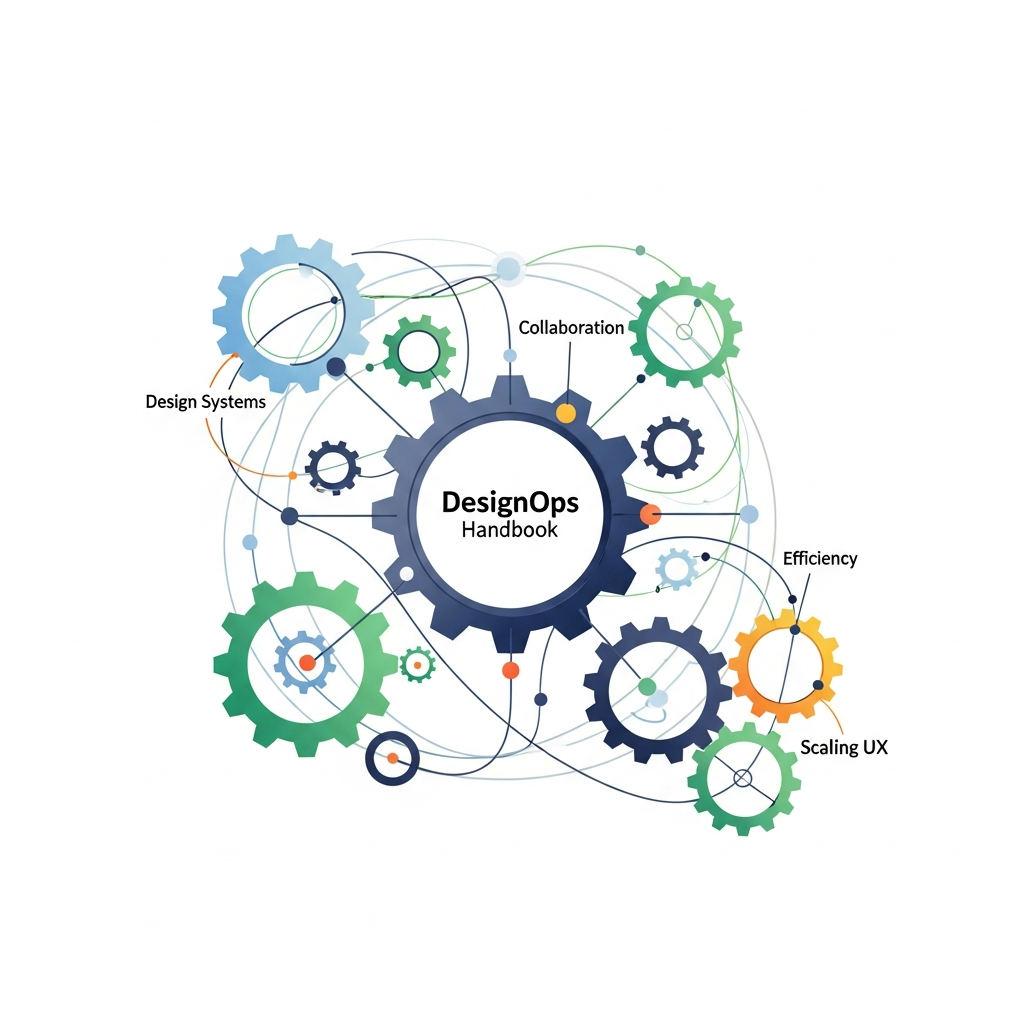
DesignOps Handbook Scaling UX
What is DesignOps and Why It Matters
DesignOps is a discipline that aligns design practice with product strategy, engineering delivery, and business operations. It focuses on creating predictable, scalable, and high-quality design output without sacrificing velocity. When teams scale, the need for consistent design language, robust governance, and repeatable processes becomes critical.
At its core, DesignOps addresses three recurring tensions: quality versus speed, consistency across products versus autonomy of teams, and governance versus creativity. A well-implemented DesignOps approach treats design as a system—not just an output—so decisions, components, and workflows can be reused and evolved over time.
For product and design leaders, DesignOps is a strategic enabler. It makes it possible to scale UX across portfolios, accelerate delivery, and maintain a coherent user experience as teams grow, new platforms emerge, and markets shift.
Pillars of DesignOps
DesignOps is most effective when it rests on a small set of durable pillars. Below are the five pillars that often drive the most meaningful outcomes: Design Systems Governance, Scaling UX Across Products, UX Team Workflows, Cross-Product Governance, and a practical Design Operations Toolkit. Each pillar is interdependent; success in one amplifies impact in others.
Design Systems Governance
A robust design systems governance model defines ownership, decision rights, and lifecycle management for design tokens, components, patterns, and accessibility standards. Governance should specify how new components are approved, versioned, and retired, and how changes propagate across product teams.
Key components include a living design system repository, a published design language, and a change process that coordinates design, product management, and engineering. When governance is clear, teams can ship faster with fewer ad-hoc deviations, and users enjoy a consistent experience even as products evolve.
Governance is not about rigidity; it’s about a scalable, transparent process. Establish a rhythm for design reviews, a clear request-and-respond timeline, and lightweight escalation paths for exceptions. A mature practice also includes accessibility and performance standards baked into the design system so they are not afterthoughts.
Scaling UX Across Products
Scaling UX means taking a multi-product portfolio and aligning user experiences, research practices, and design language across teams. It starts with a centralized design system and a shared vocabulary, but it also requires disciplined UX research collaboration, design tokens, and cross-team prioritization of patterns that work well at scale.
Practical steps include a design review cadence across product lines, a portfolio-level UX backlog, and a shared research repository. When researchers, designers, and product managers speak the same language, cross-product friction drops and onboarding, activation, and conversion improve across the board.
To scale effectively, adopt a modular approach: identify core UX patterns (navigation, onboarding, data visualization, forms) and implement them as reusable building blocks. This reduces duplication, accelerates delivery, and makes governance simpler to sustain over time.
UX Team Workflows
Workflows describe how UX work flows from ideation to delivery. They should be lightweight enough to avoid bottlenecks yet structured enough to keep quality high. Common flows include discovery and research, rapid prototyping, usability testing, and design handoff to engineering with a closed-loop feedback mechanism.
Important elements include: documented research methods, standardized research briefs, templates for wireframes and prototypes, and a design handoff checklist that ensures accessibility and performance criteria are addressed before coding begins.
As teams scale, it’s essential to define roles and responsibilities clearly. This includes design researchers, product designers, UX engineers, and design program managers who coordinate across squads. Regular knowledge sharing and design critiques fuel continual improvement.
Cross-Product Governance
Cross-product governance ensures alignment across multiple product lines and teams. It focuses on shared standards, security and privacy controls, and a common roadmap that balances autonomy with portfolio-level coherence.
Implement structures such as a Design Governance Board, a multi-product design system council, and a central design ops function that coordinates priorities, audits, and metrics. This governance layer reduces duplication and creates a single source of truth for the organization’s UX strategy.
Effective cross-product governance also requires executive sponsorship and clear metrics that demonstrate ROI, not just activity. When leadership sees measurable improvements in retention, activation, and conversion, it justifies ongoing investment in DesignOps maturity.
Design Operations Toolkit
The toolkit is a curated set of practices, templates, and tooling that makes DesignOps repeatable. It includes governance processes, research and design templates, component libraries, accessibility checklists, usability testing playbooks, and metrics dashboards.
Having a documented toolkit helps teams onboard quickly, maintain consistency, and scale responsibly. The toolkit should be living—updated as patterns evolve and new platforms emerge. It also serves as a training resource for new designers and product managers joining the organization.
Building a Governance Model
A governance model formalizes who decides what, when, and how. It is not a compliance exercise; it’s a practical framework that accelerates decision-making while preserving design quality.
Start with three questions: Who owns the design system? How are changes approved and versioned? What are the criteria for adding new patterns? Answering these helps prevent duplicate components, conflicting styles, and late-stage design debt.
Implementation steps include mapping current workflows, identifying bottlenecks, and defining a lightweight set of governance rituals. Typical rituals include quarterly design system reviews, monthly design system dashboards, and weekly design critique sessions, all tied to a visible roadmap.
Governance should also account for vendor alignment and offshore or partner teams. Clearly documented standards, escalation paths, and success metrics ensure predictable outcomes across distributed squads.
From Strategy to Execution: A Practical Playbook
The playbook translates DesignOps theory into actionable steps. It blends research-driven design with governance discipline, enabling teams to move from idea to shipped product with confidence.
- Audit current design practices, component libraries, and design language. Identify gaps, overlaps, and inconsistencies across products.
- Define the design language and establish a design system scope. Decide which components are core, which are platform-specific, and how tokens will be managed.
- Governance setup appoint owners, establish decision rights, and publish a change process with SLAs for reviews.
- Prototype and test with rapid cycles. Validate new patterns in real product contexts before broad adoption.
- Handoff and implementation ensure a clean bridge between design and engineering. Use design handoff checklists and automated token generation where possible.
- Measure and iterate track usage, conversion, and satisfaction. Feed results back into the governance loop for continuous improvement.
Each step should be accompanied by templates, checklists, and example artifacts. The goal is to create a repeatable flow that teams can adopt across portfolios without rebuilding the wheel for every project.
As a practical rule, keep governance lightweight at first and scale up as you achieve consistency. A minimal viable governance model can still produce meaningful improvements if paired with disciplined execution.
Measuring Success: Metrics and ROI
Measuring DesignOps impact requires a balanced set of leading and lagging indicators. Align metrics with business goals such as activation, retention, onboarding speed, and customer satisfaction.
- Efficiency metrics: design cycle time, time-to-ship, and handoff latency.
- Quality metrics: consistency score across products, accessibility conformance, and defect rate in UI components.
- User experience metrics: task success rate, time-on-task, and perceived ease of use from usability tests.
- Portfolio-level metrics: design system adoption rate, number of reusable components, and cross-product consistency index.
- Business outcomes: activation rate, conversion rate, churn reduction, and net promoter score shifts linked to UX improvements.
Visual dashboards that tie UX activity to business results are essential. When executives can see a clear line from governance decisions to revenue or retention improvements, the case for ongoing DesignOps investment becomes compelling.
Tooling Landscape: What to Invest In
Invest in a focused set of tools that support collaboration, governance, and consistency. The aim is to reduce friction between design, product, and engineering while enabling scalable delivery across teams.
- a centralized repository of components, tokens, and patterns with versioning.
- a handoff tool that translates design to engineering-ready specs, assets, and accessibility checks.
- a shared repository for user research notes, test recordings, and synthesis templates.
- dashboards that correlate UX changes with product metrics like activation and retention.
- automated checks baked into the design and development workflow.
Choose tools that integrate with your existing stack and allow phased onboarding. Start with the highest-impact areas (design tokens and component governance) and expand to include more advanced analytics and testing workflows as maturity grows.
Risks, Pitfalls, and How to Avoid
Even well-intentioned DesignOps programs fail if they become bureaucratic or disconnected from product goals. Common pitfalls include over-engineering the governance, enforcing design rules that stifle creativity, or treating the design system as an isolated artifact rather than a living product.
- Pitfall: excessive approvals causing bottlenecks. Mitigation: implement SLAs and empower teams with clear decision rights.
- Pitfall: a sprawling design system that never ships. Mitigation: start with core, ship early, and iterate.
- Pitfall: misalignment with engineering constraints. Mitigation: involve engineering early in the governance process.
- Pitfall: lack of executive sponsorship. Mitigation: secure a visible sponsor and a measurable roll-up strategy.
By anticipating these common traps and structuring governance around real product outcomes, teams can sustain momentum and deliver tangible UX improvements across portfolios.
Roadmap to DesignOps Maturity
DesignOps is a journey, not a destination. A pragmatic roadmap helps teams advance from ad hoc design processes to a mature, scalable operating model.
- Level 1 — Foundational: establish a core design system, set governance roles, and implement basic handoff rituals.
- Level 2 — Repeatable: standardize research templates, create reusable patterns, and track design cycle times.
- Level 3 — Scaled: roll out cross-product governance, consolidate under a portfolio design system, and measure ROI.
- Level 4 — Optimized: continuously improve through automation, data-driven design decisions, and design ops as a strategic function.
Each level requires different investments and stakeholder alignment. Start with a pragmatic sprint that delivers a visible win, then build the governance and tooling to sustain momentum as the organization grows.