
Operationalizing Observability Pipelines WOLFx Blueprint
- all
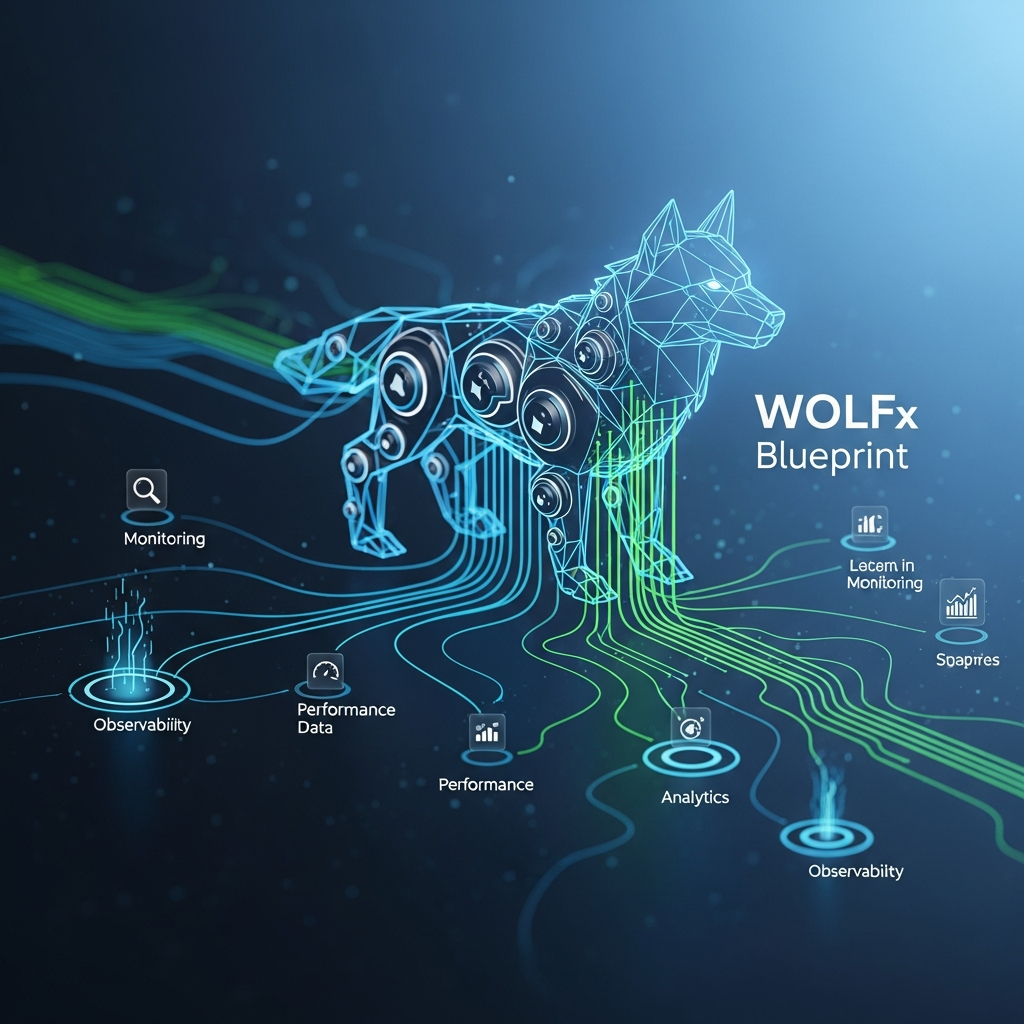
Operationalizing Observability Pipelines WOLFx Blueprint
Table of Contents
- Why Observability Matters for Agentic AI
- The Observability Stack: Metrics, Traces, and Logs
- Architectural Patterns in the WOLFx Blueprint
- Instrumentation and Data Modeling for Agents
- Operational Practices: SRE, Incident Response, and Runbooks
- Governance, Security, and Compliance Considerations
- Implementation Playbook: 8-Week Rollout
- Common Pitfalls and How to Avoid Them
- Next Steps: Adopting the WOLFx Observability Blueprint
Why Observability Matters for Agentic AI
Agentic AI systems operate at the intersection of perception, decision, and action. They rely on a continuous loop of observations, inferences, and executions across distributed components such as planners, agents, environments, and external services. Observability is not a luxury; it is a prerequisite for reliability, safety, and scale in production environments.
In practice, observability for agentic systems answers three core questions: Is the system healthy? Why did it behave this way? What will likely happen next? By framing telemetry around these questions, platform teams can detect drift, diagnose failures quickly, and steer agent behavior toward desired outcomes while maintaining governance and compliance.
Adopting an agent-first observability mindset helps reduce MTTR (mean time to repair), accelerates debugging across heterogeneous components, and enables proactive risk management. It also provides a foundation for capacity planning, cost control, and security postures that scale with increasingly complex agent networks.
The Observability Stack: Metrics, Traces, and Logs
Observability rests on three pillars: metrics, traces, and logs. Each pillar provides a distinct lens on agentic workflows, and together they form a cohesive picture of system behavior across time and space.
Metrics: Quantifying Health and Performance
Metrics are numerical measurements that summarize the state of the system. For agentic pipelines, key metrics include latency budgets for decision cycles, success/failure rates of actions, queue depths in task dispatchers, and throughput of agent executions. Instrument metrics at the boundaries of each component—the agent core, environment adapters, and external services—to detect degradation early.
- Service-level indicators (SLIs): average latency, 95th percentile latency, error rate, and saturation levels.
- Resource utilization: CPU, memory, GPU (for ML workloads), and I/O bandwidth.
- Agent-specific indicators: decision confidence, policy drift, exploration vs. exploitation ratios.
Metrics should be labeled with consistent dimensions (region, version, agent type, environment) to enable slicing when troubleshooting across a distributed stack.
Traces: Following End-to-End Request Journeys
Distributed tracing reveals how a request traverses the agentic pipeline—from input ingestion through planning, reasoning, action, and feedback. Traces help answer questions about which component contributed to latency, where failures occurred, and how retries propagate through the system.
- Trace spans should be lightweight but informative, with meaningful names for stages like ingest, plan, act, and observe.
- Context propagation must include correlation IDs to stitch telemetry across services and agents.
- Sampling strategies should balance data fidelity with storage costs, increasing sampling during normal operations and expanding during incidents.
Logs: Structured and Rich for Forensics
Logs provide the granular detail necessary for post-incident analysis and audit trails. Structured logging—JSON or similar schemas—facilitates fast querying and dashboarding. Include actionable fields such as event type, agent_id, environment, version, input_context, outcome, and error_codes.
Log verbosity should be tunable by environment and feature flag, ensuring developers can reproduce issues without drowning in noise during steady-state operations.
Architectural Patterns in the WOLFx Blueprint
The WOLFx blueprint for observability embraces modularity, governance, and clarity of ownership. Below are architectural patterns that align with scalable agentic systems while maintaining security and compliance.
Pattern 1: Observability as a First-Class Service
In this pattern, observability is a dedicated service layer with standardized interfaces for metrics, traces, and logs. Each component emits telemetry to a central portal, enabling cross-cutting dashboards, alerting, and anomaly detection. This separation of concerns improves maintainability and simplifies onboarding of new agents or environments.
Pattern 2: Event-Driven Telemetry Pipeline
Telemetry events flow through an event bus to a stream processor that enriches, aggregates, and routes data to storage and analytics systems. This approach decouples producers from consumers, enabling asynchronous processing, replay, and scalable backpressure management—crucial for bursty or high-velocity agent workloads.
Pattern 3: Agent-Aware Context and Provenance
Telemetry should carry rich agent context—version, policy set, training data lineage, and decision rationale when available. Provenance data supports auditability, regulatory compliance, and reproducibility of agent behavior across iterations and deployments.
Pattern 4: Secure Telemetry Interfaces
Telemetry channels must be secured with encryption in transit and at rest, with strict access controls and auditing. Consider role-based access, least-privilege service accounts, and periodic telemetry schema reviews to prevent data leakage and ensure privacy.
Instrumentation and Data Modeling for Agents
Effective observability rests on disciplined instrumentation. A practical data model ties telemetry to a common ontology—events, contexts, and outcomes—so that dashboards and analytics can scale with new agent types and environments.
Telemetry Objects: Event Taxonomy
Define a compact set of telemetry primitives: InputEvent, DecisionEvent, ActionEvent, EnvironmentEvent, and OutcomeEvent. Each event should carry schema-enforced fields such as timestamp, agent_id, environment, version, and result_code. This taxonomy underpins consistent analysis across microservices, agents, and external integrations.
Schema Governance
Maintain a living schema registry with versioned payload definitions. Enforce backward compatibility rules to avoid breaking dashboards when telemetry schemas evolve. Regularly audit fields for relevance, privacy, and regulatory compliance.
Operational Practices: SRE, Incident Response, and Runbooks
Observability without disciplined operations is prone to drift. A production-ready blueprint requires explicit escalation paths, runbooks, and automated validation gates that protect releases of agentic systems.
Service Reliability Engineering (SRE) Mindset
Adopt SRE patterns such as error budgets, blameless postmortems, and SLO-driven alerting. Define SLOs for critical agent pipelines (e.g., mean time to detect, latency targets for planning cycles), and tie alerts to actionable runbooks.
Incident Response Playbooks
Develop playbooks for common failure modes: planning loop stalls, environment connectivity issues, external API throttling, and data corruption. Include escalation matrices, rollback procedures, and clear criteria for on-call handoffs.
Runbooks and Playbooks
Runbooks outline step-by-step procedures for routine maintenance, while playbooks address the most critical incidents. Both should be versioned, tested, and accessible to on-call engineers, with automatic context propagation to telemetry dashboards.
Governance, Security, and Compliance Considerations
Observability data touches sensitive operational details. Governance ensures telemetry practices align with security and regulatory requirements, especially in regulated industries where agentic systems operate on personal or sensitive data.
Data Privacy and Access Control
Impose strict access controls on telemetry stores. Employ data minimization, encryption, and anonymization where feasible. Maintain an auditable trail of who accessed telemetry data and when.
Compliance by Design
Embed compliance checks into telemetry pipelines. For healthcare or finance contexts, ensure telemetry schemas align with applicable HIPAA, FERPA, or PCI standards, and implement data retention policies that respect regulatory timelines.
Security Monitoring of Telemetry Interfaces
Protect telemetry endpoints with mTLS, API keys, and rotating credentials. Regularly test for vulnerabilities in the observability stack and monitor for anomalous telemetry patterns that could indicate exfiltration or misconfiguration.
Implementation Playbook: 8-Week Rollout
This phased rollout provides a concrete path to operationalizing observability for agentic pipelines. It emphasizes quick wins, measurable milestones, and governance alignment with security teams.
Week 1–2: Baseline and Goals
- Inventory all agent components, data sources, and external services involved in decision loops.
- Define core SLOs, SLAs, and acceptable latency budgets for critical decision phases.
- Agree on telemetry schema, naming conventions, and data retention policies.
Week 3–4: Instrumentation and Data Pipelines
- Implement structured telemetry at key touchpoints (ingest, plan, act, observe).
- Roll out a central telemetry sink and a streaming processor for enrichment and routing.
- Establish a schema registry and versioning discipline.
Week 5–6: Dashboards, Alerting, and Runbooks
- Build dashboards that show end-to-end journey health and latency budgets.
- Configure alerting with escalation paths aligned to on-call rotations.
- Draft runbooks for common incidents and rehearse incident response drills.
Week 7–8: Validation, Governance, and Handoff
- Conduct a validation exercise simulating incident scenarios and measure MTTR improvements.
- Finalize governance policies and ensure compliance sign-offs from security and legal teams.
- Hand off the blueprint to platform teams with documentation and training sessions.
Common Pitfalls and How to Avoid Them
Observability initiatives can backfire if they generate excessive noise, fail to cover critical paths, or lose alignment with business goals. The following patterns help mitigate these risks.
- Over-collection: Collect only what adds diagnostic value and aligns with SLOs to control storage costs.
- Under-instrumentation: Missed critical paths can mask outages; instrument at decision boundaries and environment interfaces.
- Unclear ownership: Define clear ownership of telemetry pipelines, data quality, and incident response to avoid gaps.
- Bad data quality: Implement schema validation, data quality checks, and anomaly detection to maintain trust in dashboards.
Next Steps: Adopting the WOLFx Observability Blueprint
Operationalizing observability for agentic AI is an iterative journey. Start with a concrete scope, align with security and privacy stakeholders, and evolve the telemetry model as your agents learn and adapt. A phased approach helps teams gain confidence, prove ROI, and steadily increase the complexity of the agent ecosystems you support.
If you’re seeking a partner to translate these patterns into a production-ready blueprint, consider how a dedicated delivery model, governance framework, and security practices can align with your roadmap. The WOLFx blueprint is designed to scale with multi-product portfolios, regulated environments, and offshore delivery models that emphasize governance and transparency.