
SaaS Pricing Architecture Retainers
- all
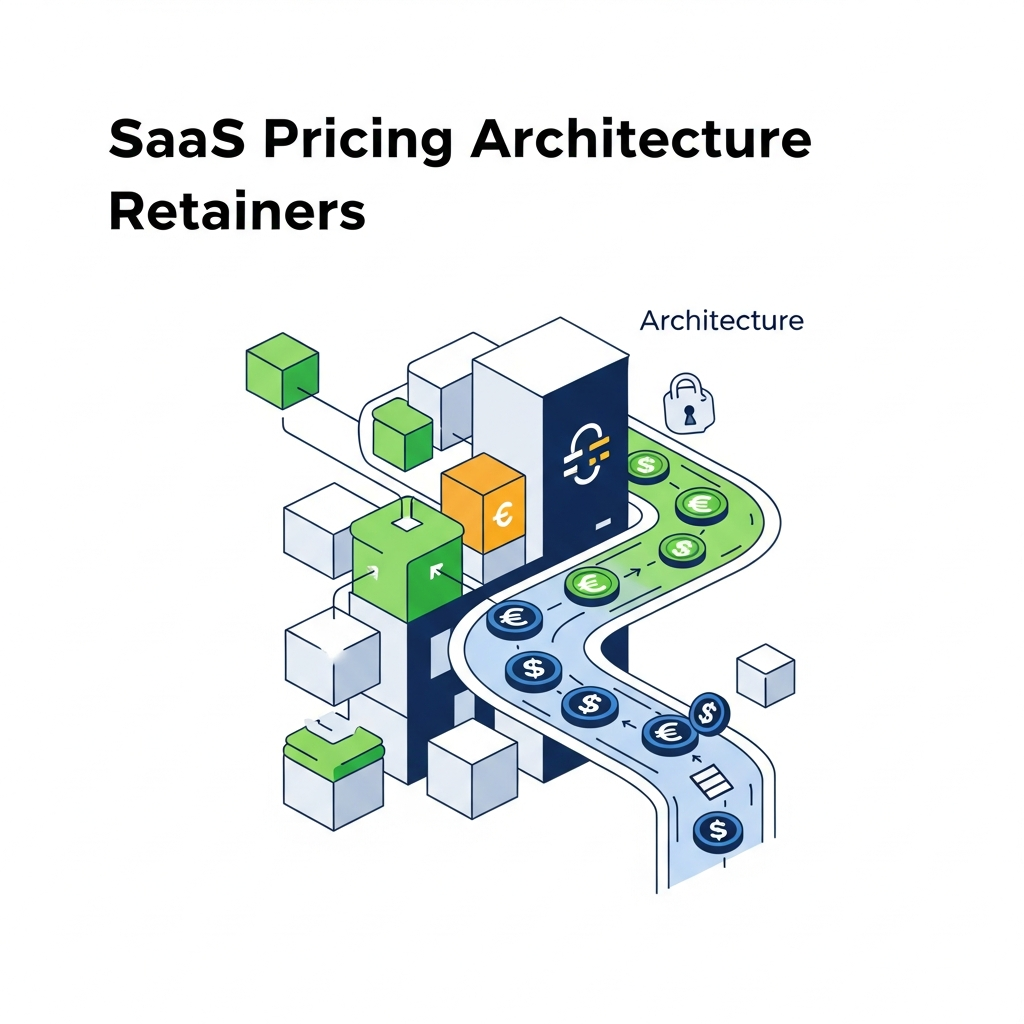
SaaS Pricing Architecture Retainers: Crafting a SaaS Pricing Model for ARR Growth
Why a SaaS pricing model matters for ARR and retention
Pricing is not just a sticker price. It is a strategic lever that drives annual recurring revenue (ARR), customer lifetime value (LTV), and retention. A well-designed SaaS pricing model communicates value, aligns incentives, and reduces churn by ensuring customers only pay for what they use or perceive as valuable. For enterprise buyers, predictable pricing also supports budgeting, procurement, and multi-year planning.
The challenge is to structure prices so they scale with value while remaining simple enough to administer. A few guiding principles help: price for outcomes, not features; leverage modularity to match customer needs; and embed governance that supports transparent forecasting for your sales and finance teams. With the right architecture, pricing becomes a strategic asset rather than a compliance checkbox.
Core pricing models: subscription, usage, and hybrid
The most common SaaS pricing paradigms are subscription-based, usage-based, and hybrids that combine both. Each model maps to different customer needs, risk profiles, and sales cycles.
Subscription pricing
Subscription pricing charges a recurring fee for access to a defined set of capabilities over a period. It provides forecasting stability and is familiar to most buyers. Subscriptions are often tiered, with higher tiers unlocking more features, more users, or greater support. The key design question is what to include in each tier and how to handle add-ons and seat-based pricing.
Usage-based pricing
Usage-based (or consumption-based) pricing aligns price with actual usage. This model is attractive when customer value scales with usage or when usage is highly variable across customers. It requires reliable metering, transparent usage reporting, and clear caps or overage rules to prevent revenue shocks for customers.
Hybrid and value-based pricing
Hybrid models combine subscription access with usage meters or tiered add-ons. Value-based pricing sets price according to the customer-perceived value, often supported by outcomes, ROI, or business metrics. Hybrid structures can hedge risk for vendors while offering customers predictability and scalability.
When choosing a model, consider customer segments, deployment scale, and the nature of the product’s value. Enterprise customers often favor predictable subscriptions with optional usage-based components for scale-sensitive features. Startups may benefit from a flexible hybrid that supports growth without deterring early customers.
Retainer pricing in SaaS: when and how to use it
Retainer pricing is a structured, reusable arrangement that charges a fixed upfront or ongoing fee for a defined period, granting a minimum level of deliverables or capacity. In a SaaS context, retainers are often deployed for managed services, ongoing feature delivery, premium support, or dedicated customer success and implementation resources.
Retainers are particularly valuable when a provider offers ongoing value beyond the core software—such as custom integrations, incremental feature development, or strategic governance. They enable predictable capacity planning for both vendor and customer, reduce ramp time for new initiatives, and smooth out revenue volatility that can accompany purely project-based work.
To design effective retainer pricing, define three elements clearly: (1) scope of work (capacity, response times, and service levels), (2) governance and change control (how work requests are prioritized and approved), and (3) escalation and renewal policies (terms for extending or adjusting the retainer). A well-structured retainer can complement a subscription by ensuring ongoing optimization and value realization.
Designing pricing tiers for SaaS
A tiered pricing approach translates product capabilities into differentiated value. Each tier should represent a distinct combination of features, user allowances, performance thresholds, and support levels. The goal is to create stair-step value that motivates customers to upgrade while preserving perceived fairness across tiers.
Guidelines for tier definitions
- Map features to value: Put essential, high-ROI features in the base tier and reserve advanced or niche capabilities for higher tiers.
- Consider usage ceilings: Include reasonable limits on analytics, API calls, or data storage that justify tier upgrades as customers scale.
- Guardrails for upgrades and downgrades: Ensure customers can move between tiers with proportional billing and minimal friction.
- Include premium support in top tiers: Enterprise buyers often value faster response times and dedicated escalation paths.
Sample tier matrix
Base Tier: core features, 1-5 users, standard support. Growth Tier: additional features, higher usage caps, standard to priority support. Enterprise Tier: full feature set, unlimited users, premium support, custom SLAs.
When constructing tiers, keep complexity manageable. Too many tiers can confuse buyers and hinder sales motion. Use a small, deliberate ladder (e.g., three to four tiers) and offer a flexible add-on marketplace for specialized needs.
Aligning with a recurring revenue strategy
A recurring revenue strategy emphasizes long-term customer relationships, higher retention, and predictable cash flow. Pricing structures should support expansion into larger deployments, cross-sell opportunities, and renewal economics. A healthy SaaS business often balances initial conversion with a clear path to expansion within the product portfolio.
Key metrics to monitor include gross churn, net revenue retention (NRR), average contract value (ACV), and expansion revenue per account. Pricing should be designed to maximize NRR by reducing churn and increasing upsell opportunities as customers derive more value over time. Transparent pricing communication and ROI storytelling are essential for enterprise buyers who demand alignment with business outcomes.
Enterprise SaaS pricing: considerations for large organizations
Enterprise pricing often involves complexity beyond standard consumer- or mid-market offerings. RFPs, custom contracts, multi-year terms, and governance requirements are common. Considerations include data security, regulatory compliance, integration depth, and deployment scale. Large buyers may expect enterprise discounts, referenceable case studies, and formalized service levels across global teams.
Custom pricing and governance
Custom pricing might involve account-level discounts, reserved capacity, or enterprise-wide licensing models. Governance involves clear approvals, contract terms, and renewal mechanics. Establish executive sponsorship on both sides, with a dedicated commercial framework to handle changes in scope, data handling, and compliance requirements.
Discounts and term incentives
Discounts for multi-year commitments, volume-based pricing, and performance-based credits can be effective if tied to measurable outcomes. Ensure discounting does not erode perceived value; instead, tie savings to expanded usage or additional features that deliver greater ROI over time.
Architecture and pricing: how product design enables pricing choices
Pricing architecture is not just about numbers; it is tied to how the product is built and consumed. Metered usage, entitlements, and feature toggles must be architected so that pricing signals align with product capabilities. A well-designed pricing model relies on accurate metering, reliable analytics, and robust telemetry to prevent revenue leakage.
Key architectural concepts include entitlement services, metering and quota management, and feature flag governance. By embedding pricing logic into the product’s core services, teams can automate renewals, usage-based charges, and upgrade paths. This reduces manual intervention and improves billing accuracy for both customers and finance teams.
Implementation playbook: from revision to rollout
Revamping pricing is a cross-functional initiative. A disciplined playbook accelerates decision-making, reduces market risk, and improves adoption. Consider the following steps:
- Value assessment: quantify the value delivered by the product, features, and integrations to justify price points.
- Pricing design: draft tier structures, retainer options, and usage-based components; prepare governance terms.
- Internal alignment: secure buy-in from product, sales, marketing, finance, and legal teams.
- Customer segmentation: tailor offers for different market segments while preserving a coherent overall strategy.
- Pilot and learning: test with a select customer cohort, measure ROI, and adjust before wide rollout.
- Rollout and enablement: train sales and customer success on value messaging, objections, and renewal strategies.
- Measurement and governance: establish dashboards for churn, ARR growth, and price realization; refine over time.
Communicate shifts clearly to customers and prospects. Provide documentation, calculators, and ROI case studies to illustrate the value of the new pricing framework.
Common pitfalls and guardrails
- Overcomplication: too many tiers or meters confuse customers and slow the sales cycle.
- Unclear value signals: customers should immediately recognize what they gain with each price increment.
- Poor metering: inaccurate usage data leads to revenue leakage and trust issues.
- Rigid governance without feedback loops: pricing must adapt to market feedback and evolving value.
- Neglecting renewals: assume retention will happen; actively drive renewal conversations with clear ROI data.
Guardrails include A/B testing price points, maintaining a clean ceiling on usage, and ensuring support and onboarding costs are accounted for in the pricing model. Regularly review prices against market benchmarks and customer satisfaction signals.
Case study sketch: Retainers in a SaaS delivery model
Imagine a mid-market SaaS provider delivering a security analytics platform with a large enterprise footprint. The product team wants ongoing feature delivery, proactive optimization, and dedicated governance for a multi-year contract. A retainer arrangement is introduced to guarantee a minimum delivery capacity each quarter, coupled with a subscription for core access and a set of usage-based add-ons for peak demand periods.
Over 12 months, the vendor provides regular feature commits, monthly health reviews, and quarterly ROI reports. The enterprise appreciates predictable costs and faster feature delivery, while the vendor benefits from steady revenue and improved planning accuracy. This joint approach aligns incentives and reduces renewal friction, ultimately lifting ARR and customer lifetime value.
Decision framework: retainer vs subscription-only models
When deciding between retainers and pure subscription pricing, consider these decision criteria:
- Value certainty: If ongoing delivery and governance drive measured outcomes, retainers can lock in capacity and ensure continued optimization.
- Forecasting needs: For predictable capacity and resource planning, retainers offer better revenue predictability than variable usage.
- Customer maturity: Enterprise buyers often value retained governance and ongoing optimization, while startups may prioritize flexible, low-friction subscriptions.
- Risk sharing: Retainers shift some delivery risk to the vendor, which can be attractive if the vendor guarantees outcomes and SLAs.
Use a hybrid approach where core access is subscription-based, and a separate retainer covers ongoing optimization, implementation support, and strategic initiatives. This combo preserves simplicity while delivering continuous value.