
Scalable-Ecommerce: Headless Architecture Checklist
- all
Scalable-Ecommerce: Headless Architecture Checklist
Why headless ecommerce architecture matters for scalability and personalization
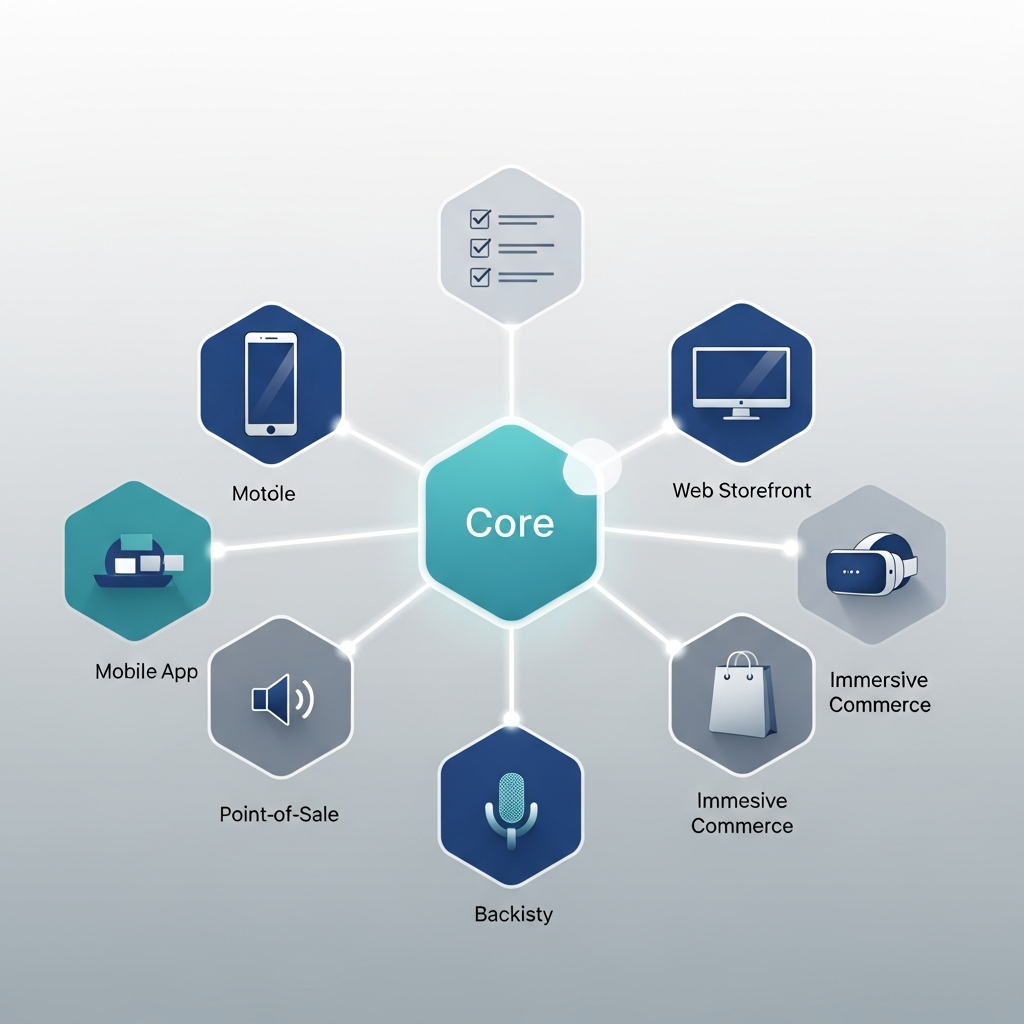
Headless ecommerce decouples the front-end presentation layer from the back-end commerce engine. This separation enables teams to iterate user experiences rapidly while preserving a robust, scalable commerce core. For mid-market and enterprise digital environments, the key benefits include faster time-to-market for new storefronts, improved personalization through flexible data delivery, and safer, more controlled deployment cycles across multiple sales channels.
In practice, organizations gain the ability to deliver consistent brand experiences across web, mobile apps, kiosks, and partner storefronts without being bottlenecked by a monolithic backend. The architecture supports parallel work streams: front-end teams can innovate independently while back-end engineers optimize product catalogs, pricing, and order orchestration in a scalable, API-driven fashion.
This checklist focuses on pragmatic strategies for evaluating, migrating to, and operating a headless storefront that scales with demand, while maintaining governance, security, and performance at the edge.
API-first patterns and architecture options
At the core of headless commerce is an API-first mindset. APIs define how the storefront interacts with product data, pricing, inventory, cart, checkout, and fulfillment services. Designing for API-first interoperability sets the stage for consistent experiences across multiple channels and reduces integration risk during migration.
API-first design principles
- Define stable, versioned APIs with clear contracts (OpenAPI/Swagger) to minimize breaking changes across storefronts.
- Embrace hypermedia or well-documented resource models to enable flexible front-end consumption.
- Implement retry strategies, circuit breakers, and idempotent operations to improve resilience during peak loads.
- Adopt authentication and authorization patterns (OAuth 2.0, JWT) that scale across services and channels.
Headless architecture options
- Full API-first with a separate frontend (static rendering, JS frameworks) and a robust backend commerce engine.
- Microfrontend approaches for ultra-fast, independently deployable storefront components that compose into a unified experience.
- Use a headless CMS or commerce platform as the content-first layer, with a decoupled storefront rendering layer.
- Server-side rendering (SSR) for SEO and performance, combined with client-side hydration for interactivity.
Each option has trade-offs in complexity, time-to-value, and governance. The right choice depends on your product portfolio, market demand, and internal capabilities. A pragmatic path often starts with a headless storefront on top of an API-driven commerce engine, then gradually migrates additional channels and services.
CDN, caching, and performance considerations
Performance is a competitive differentiator in ecommerce. A headless approach lets you push content closer to customers via a Content Delivery Network (CDN) and optimize dynamic pages with edge caching. This combination reduces latency, improves time-to-interactive, and enhances search engine visibility.
- Place static assets and media at edge locations to minimize round-trips for the initial user view.
- Cache dynamic content where safe, using strict cache-control headers and appropriate invalidation rules tied to product updates and promotions.
- Leverage edge computing for personalization rules, geolocation, and A/B testing at the edge to avoid cold starts on origin servers.
- Adopt a modern CDN strategy that supports purging, stale-while-revalidate, and real user monitoring for continuous performance tuning.
Beyond the CDN, architectural choices such as serverless functions for ephemeral workloads and scalable object storage contribute to predictable costs and fast ramp-up during peak seasons. A well-implemented CDN and caching strategy are integral to meeting consumer expectations for fast, reliable shopping experiences.
Practical migration checklist
migrat ing to a headless storefront is not a one-time event; it is a staged program with governance, risk management, and measurable milestones. The following checklist helps teams structure a practical migration journey from assessment to ongoing optimization.
- Define business objectives and measurable goals (speed to market, conversion rate, personalization reach).
- Inventory your current stack: data models, product catalog schemas, pricing rules, order flows, and integrations (ERP, CRM, payments).
- Choose an architectural pattern aligned with your product portfolio (API-first core with headless frontend, or a hybrid approach for gradual transition).
- Assess data governance and privacy implications, especially for regulated industries and cross-border data flows.
- Establish a data migration plan: mapping, cleansing, deduplication, and synchronization with the new backend.
- Plan the storefront migration in stages (pilot channel first, then expand to mobile and other touchpoints).
- Define API contracts, versioning strategy, and a robust test plan (unit, integration, and end-to-end tests across channels).
- Design the front-end architecture for performance (SSR, hydration, chunking, and lazy loading).
- Set up observability: centralized logging, metrics, traces, and alerting for all microservices and frontend components.
- Establish governance: change control, security reviews, and vendor management across multiple partners.
- Define rollback plans and disaster recovery scenarios with clear RPO/RTO targets.
- Prepare a vendor evaluation framework and a pilot project to validate capabilities before full-scale migration.
Below is a practical week-by-week outline to kick off a typical migration project. Adapt timelines to your team’s size, complexity, and risk tolerance.
Week-by-week migration plan (high level)
- Week 1–2: Baseline assessment and objective alignment with executives and product leadership.
- Week 3–4: Inventory and data mapping; select the API-first backend and initial frontend tech stack.
- Week 5–6: Define data migration plan and begin catalog data normalization.
- Week 7–8: Implement core APIs and establish authentication/authorization models.
- Week 9–12: Build first pilot storefront and enable edge delivery for static assets.
- Week 13–16: Complete migration of a representative product line; run parallel checks with legacy systems.
- Week 17–20: Roll out additional channels; begin performance and reliability testing at scale.
- Week 21–24: Optimize based on data; finalize governance and vendor management processes.
Migration risks and mitigations
Every migration carries risk. A structured risk management approach helps you anticipate, quantify, and mitigate potential issues before they derail timelines or budgets.
- Maintain a strict schema contract and automated migration scripts to prevent data inconsistencies.
- vendor dependency: Establish SLAs, governance boards, and exit clauses to avoid lock-in and maintain flexibility.
- security exposure: Implement secure-by-default patterns, regular security reviews, and automated vulnerability scanning.
- service availability: Build redundancy, circuit breakers, and graceful degradation for critical services.
- performance risk: Use progressive rollout, feature flags, and real-user monitoring to detect bottlenecks early.
- cost overruns: Start with a conservative capacity plan and implement autoscaling with budgets and alerts.
Mitigations should be baked into the project plan and revisited at each governance checkpoint. A proactive stance on risk reduces surprises and accelerates time-to-value.
Vendor selection criteria and evaluation rubric
Choosing the right partner for a headless commerce migration is pivotal. Use a structured rubric that covers technical capabilities, governance, and cultural fit. Consider the following criteria and sample questions during the evaluation process.
Do they have proven experience with API-first architectures, headless storefronts, and CDN optimization? Can they demonstrate scalability patterns and performance wins from real projects? Are their preferred stacks compatible with your current tech choices or your target roadmap? Do they follow a secure software development lifecycle, with ongoing audits and regulatory readiness where needed? Can they support offshore/onsite models, dedicated teams, or project-based engagements with transparent governance? How do they handle contracts, change management, and risk sharing across multiple suppliers? Can they provide case studies or references showing measurable improvements in performance, conversions, or time-to-market? How do they handle discovery, design, and QA, and how do they integrate with your product teams? Do they offer a roadmap-style engagement to ensure ongoing value beyond a single migration milestone? Are there clear pricing models, including fixed-price, retainer, or milestone-based billing?
Use a scoring rubric to rate each vendor against these criteria. A transparent rubric helps leadership compare options objectively and reduces decision risk.
Security, privacy, and compliance considerations
Security is non-negotiable in ecommerce. A headless architecture amplifies the need for robust access controls, data handling policies, and secure data flows between components and partners. Key areas to address include:
- Identity and access management across frontend apps, backend services, and internal tooling.
- Data protection in transit and at rest, with encryption and key management policies.
- Privacy compliance for customer data, including region-specific requirements and retention policies.
- Secure API design with rate limiting, auditing, and vulnerability scanning integrated into CI/CD.
- Third-party integrations assessment, including payment gateways, ERP, and CRM systems.
- Incident response and disaster recovery planning with defined RTOs and RPOs.
Adopt a security-by-design approach from the outset. Regular security reviews, red-team exercises, and automated testing help protect the storefront as it scales across channels and geographies.
Operational excellence: observability and governance
Operational maturity is what sustains a headless storefront over time. Observability, deployment discipline, and governance processes ensure predictable performance and continuous improvement.
- Unified observability: centralized logging, metrics, traces, and dashboards across microservices and front-end components.
- CI/CD with automated testing, secure build pipelines, and rapid rollback capabilities.
- Performance budgets to cap resource usage and prevent runaway costs during peak events.
- Change governance: a clear process for API versioning, feature flags, and release scheduling.
- Cost governance: monitoring and optimization for CDN, compute, and storage across environments.
- Vendor management: ongoing reviews of delivery performance, security posture, and contract alignment.
Investing in governance and observability reduces mean time to detect and resolve issues, while providing the data needed to optimize user experience and operational efficiency over time.
Roadmap example for a scalable storefront migration
Below is a high-level 6- to 12-month roadmap that many organizations adapt to their context. Customize milestones to align with market deadlines, regulatory cycles, and internal capacity.
- Phase 1: Discovery and governance — define success metrics, select stack, set up governance bodies, and document API contracts.
- Phase 2: Foundation — implement core APIs, identity, data migration plan, and initial edge-ready storefront.
- Phase 3: Channel expansion — enable mobile apps, partner storefronts, and content delivery optimization.
- Phase 4: Optimization — performance tuning, SEO improvements, and A/B testing at scale.
- Phase 5: Security and compliance hardening — audits, SOC/ISO alignment if relevant, and continuous monitoring.
- Phase 6: Scale and evolve — introduce additional modules (CRM/ERP integrations, AI-powered recommendations) and broaden regional coverage.
Each phase should include success criteria, resource plans, and a clear decision point to proceed or adjust. Document learnings to inform future cross-channel initiatives and ensure consistency across products.
Conclusion: making an informed decision
Headless ecommerce architecture offers a path to faster experimentation, personalized experiences, and scalable, edge-accelerated storefronts. A structured checklist helps digital leaders navigate product decisions, assess migration risks, and align stakeholders around a clear vision. Use API-first patterns, CDN-enabled performance, and a rigorous governance model to maximize return on investment and preserve the flexibility needed to respond to market shifts.
Remember that successful migration is not merely a technology change—it is a strategic initiative that touches data, processes, and people. Engaging with a partner who can balance architectural rigor with practical delivery, governance, and risk management will help you achieve a scalable, future-proof headless storefront that drives conversions and long-term growth.