
Vendor Security Due Diligence — A CTO Checklist
- all
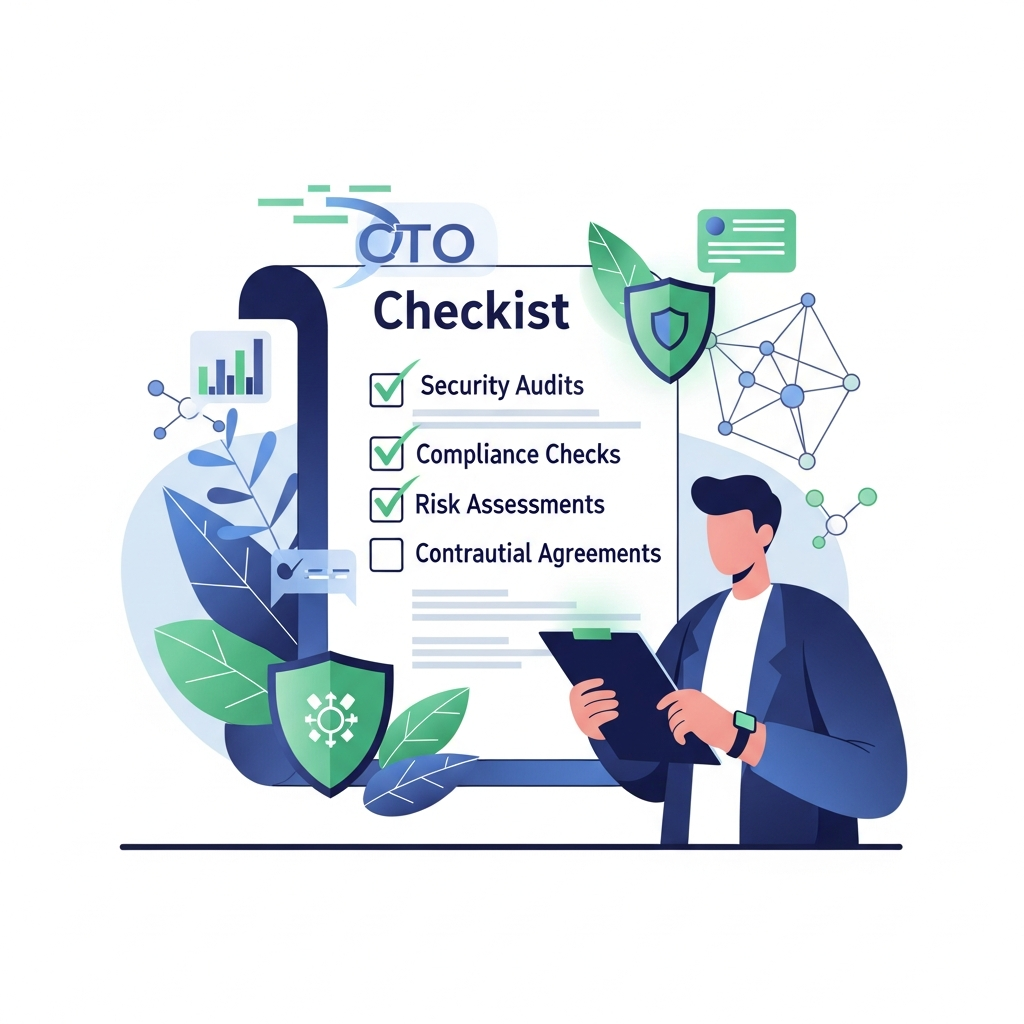
Vendor Security Due Diligence — A CTO Checklist
Purpose and Scope
Security due diligence is a structured process that helps technology leaders assess how a vendor protects data, manages risk, and fulfills contractual obligations. The goal is to reduce risk, align with regulatory expectations, and ensure reliable performance as you scale. This checklist is designed for CTOs and procurement leads who vet software vendors before entering contracts or signing complex SLAs.
Effective due diligence starts early in the vendor lifecycle. It spans governance, technical controls, data protection, and ongoing oversight. A well-defined process also clarifies responsibilities, sets clear expectations, and supports audit readiness during procurement and after deployment.
Key Security Domains to Assess
Information security governance and policy posture
Assess how a vendor frames information security at the highest level. Look for a formal security program, senior ownership, and documented policies that map to common frameworks (for example, NIST, ISO 27001, or SOC 2). Ask for recent audit reports, board-level risk reviews, and evidence of continual improvement. Governance should translate into concrete actions, such as quarterly risk assessments, vulnerability management, and incident response drills.
Practical checks include roles and responsibilities, change management procedures, and clear escalation paths. A mature program assigns responsibility for security to owners who are accountable for risk reduction and remediation timelines. Ask for evidence of executive sponsorship and cross-functional coordination with product, legal, and compliance teams.
Data protection, privacy, and regulatory alignment
Data security and privacy controls are central to vendor trust. Review data handling across data at rest, in transit, and in use. Confirm encryption standards, key management practices, and access controls. For regulated domains (finance, healthcare, education), ensure alignment with applicable laws and standards, such as HIPAA, FERPA, GDPR, or sector-specific requirements.
Key questions include how data is classified, where data is stored and processed, and whether data residency requirements are met. Look for a formal data retention and deletion policy, data breach notification timelines, and a clear process for data localization where required.
Application security and software development lifecycle
Evaluate how security is integrated into design, development, testing, and deployment. A mature vendor follows a secure SDLC with threat modeling, secure coding standards, and regular testing. Request evidence of code reviews, static and dynamic analysis results, and vulnerability remediation SLAs.
Assess how dependencies are managed, how open-source components are tracked, and how software composition analysis (SCA) is conducted. The answer should include a plan for handling zero-day vulnerabilities and a clear vulnerability remediation workflow that ties to your risk thresholds.
Identity, access management and cloud security
Identity and access management (IAM) is the gatekeeper of your data. Confirm how authentication, authorization, and session management are implemented. Look for MFA options, least privilege access, and role-based controls that support your organization’s security model. Cloud security controls—such as network segmentation, logging, and monitoring—should be robust and consistent with your own cloud posture.
Ask for architecture diagrams showing data flows, microservice boundaries, and data sovereignty considerations. Ensure the vendor can align with your security baseline, including incident detection, logging, and auditability of critical actions.
Assessment Approaches
Questionnaire-based assessments (SIG, CAIQ, and equivalents)
Structured questionnaires help standardize security posture assessment. The Security Information Gathering (SIG) and Consensus Assessments Initiative Questionnaire (CAIQ) provide a baseline for security controls, governance, and risk management. Use them to surface gaps and track remediation over time. Treat these as live documents that evolve with product changes and regulatory shifts.
When reviewing responses, map each control to a risk category (high, medium, low) and tie findings to concrete mitigations. Require evidence, not promises, and set clear deadlines for remediation.
Active testing and vulnerability management
Active testing includes vulnerability scanning, penetration testing, and manual testing where appropriate. Before tests, define scope, rules of engagement, and expectations for reporting. Request the most recent test results, remediation timelines, and proof of recertification after fixes.
Vulnerability management should be continuous, not a one-off event. Seek a documented process for tracking identified issues, assigning ownership, and validating remediation in production-like environments before go-live.
Threat modeling and architecture review
Threat modeling helps identify risks early in the lifecycle. The vendor should demonstrate how they analyze potential attackers, assets, and attack surfaces. Look for documented strategies to mitigate control weaknesses with specific controls, compensating measures, and ongoing risk reassessment as the product evolves.
Vendor Risk Management and Governance
Contractual protections: security SLA clauses
Security SLAs align vendor performance with your risk tolerance. Insist on defined response times for incidents, vulnerability remediation SLAs, and clear ownership of security responsibilities. Require commitments around data breach notification timelines, forensic cooperation, and remediation verification.
Incorporate security-specific metrics in the contract, including mean time to detect (MTTD) and mean time to respond (MTTR) for critical incidents. Tie SLAs to financial remedies or service credits when security obligations are not met, and ensure your legal team can validate enforceability across jurisdictions.
Vendor monitoring, audits and ongoing oversight
Governance extends beyond the initial assessment. Establish an ongoing oversight program with regular security reviews, quarterly risk dashboards, and scheduled third-party audits. Define how findings are tracked, escalated, and finally closed. Build a cadence that suits your risk posture and regulatory needs.
Consider requiring annual or biannual third-party audits, with reasonable access to applicable artifacts. Maintain an up-to-date risk register that flags new exposures as the vendor’s product stack changes or as regulatory expectations evolve.
Procurement Security Checklist You Can Adapt
- Define risk thresholds aligned to data sensitivity and regulatory requirements.
- Request security policies, architecture diagrams, and data flow maps.
- Obtain evidence of governance practices: risk committees, policy reviews, and board-level reporting.
- Ask for the latest security audit reports and remediation evidence.
- Require a documented secure development lifecycle and vulnerability management plan.
- Seek clear IAM controls, MFA options, and least-privilege access design.
- Confirm data protection measures: encryption, key management, and data retention policies.
- Verify incident response capabilities and breach notification timelines.
- Check cloud security posture and configuration management for the deployment model.
- Negotiate security-focused SLAs with measurable response and remediation commitments.
Use this checklist as a living document. Update it as product changes occur or as your regulatory landscape shifts. It should accompany vendor negotiations, not replace due diligence findings.
Common Pitfalls and Best Practices
- Pitfall: Treating due diligence as a one-off exercise. Best practice: Establish ongoing governance with regular reassessments and evidence-driven remediation.
- Pitfall: Accepting generic vendor statements. Best practice: Demand verifiable artifacts, test results, and real-world evidence of control effectiveness.
- Pitfall: Focusing only on technology, not process. Best practice: Evaluate people, process, and technology together, including governance and culture of security.
- Pitfall: Underestimating data flows across borders. Best practice: Map data residency, localization requirements, and cross-border data transfer controls.
Best practices include multi-disciplinary teams in the evaluation, cross-referencing assessments with insurance coverage (cyberliability where applicable), and aligning vendor security with your own corporate policies. A structured approach reduces surprises during audits and during production incidents.
From Due Diligence to Deployment Readiness: A Practical Scenario
Imagine a mid-sized fintech startup evaluating a vendor for an API-first payments integration. The CTO initiates a structured diligence program that begins with governance and policy posture, then expands into data protection and application security. The vendor provides an SIG response, security test results, and a threat modeling overview. The team conducts a controlled penetration test in a staging environment and validates the vendor’s incident response plan with a tabletop exercise.
As remediation items are addressed, the procurement team revisits security SLAs and updates the contract with concrete breach timelines and remediation targets. The resulting governance framework includes quarterly reviews and a clear escalation path. Only after successful demonstrations of control effectiveness and aligned SLAs does the product integration proceed to production with confidence.
CTO Checklist Framework
Use this framework to guide conversations with vendors and align teams across security, product, and legal.
Phase 1: Preparations and risk framing
- Define data sensitivity and regulatory exposure
- Assign owners for each security domain
- Choose baseline frameworks (NIST/ISO SOC 2) for reference
Phase 2: Evidence gathering
- Obtain policies, architecture diagrams, and control mappings
- Request audit reports and vulnerability history
- Validate identity management and data protection measures
Phase 3: Verification and remediation
- Run validation tests and verify remediation closes gaps
- Negotiate security SLAs with clear metrics
- Finalize a governance cadence for ongoing oversight
Phase 4: Deployment readiness
- Confirm incident response and breach notification readiness
- Validate logging, monitoring, and alerting in production
- Ensure contractually supported audits and extension rights
Conclusion and Next Steps
Vendor security due diligence is foundational to risk management, especially when outsourcing critical software functions. A disciplined, evidence-driven approach helps CTOs validate security controls, align with regulatory expectations, and establish governance that scales with the business. Use the CTO checklist to structure negotiations, drive remediation, and set a clear path from evaluation to deployment.
Remember: security is a continuous journey. Build a living program that evolves with product changes, regulatory updates, and emerging threats. A strong due diligence practice reduces risk, increases trust with customers, and accelerates secure innovation across the technology stack.